Updated September 2025 • 10 products ranked • All major livestock types covered • Independent review perspective
Quick Answer
For farmers who need a single portable electric fence charger that can grow with their operation, the VetraPulse Multi-Power 2J/3J/5J leads this ranking in 2025. Its adjustable output, dual AC/DC compatibility, real-time LED display with fault alarm, and IP65 weatherproofing deliver a spec set that typically requires spending $250 or more elsewhere. For large AC-only properties, the Zareba 50 Mile is the proven workhorse. Off-grid operations with significant acreage should look at the Parmak Magnum Solar-Pak 12. Budget-conscious backyard chicken setups will find everything they need in the Happy Henhouse AC at under $50.
Table of Contents
- Top 10 Electric Fence Charger Rankings
- Full Comparison Table
- 1. VetraPulse Multi-Power 2J/3J/5J
- 2. Zareba 50 Mile AC Charger
- 3. Gallagher M120 AC Energizer
- 4. Parmak Magnum Solar-Pak 12
- 5. Cyclops Brute 8J
- 6. Happy Henhouse AC Charger
- 7. Epoify 24-Hour Solar
- 8. Patriot PE-5 AC Charger
- 9. Premier 1 Intellishock 60
- 10. Speedrite 1000S
- Buying Guide: Key Factors
- Which Charger for Which Animal
- Joule Output Comparison
- Frequently Asked Questions
- Sources
Top 10 Portable Electric Fence Charger Rankings
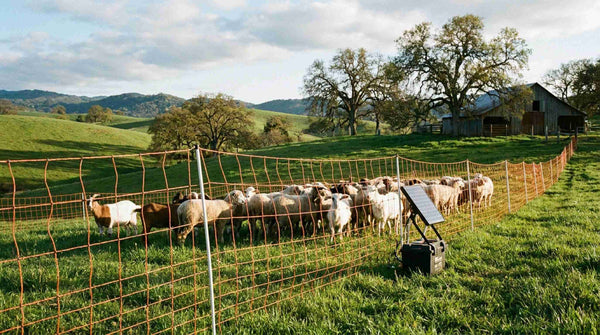
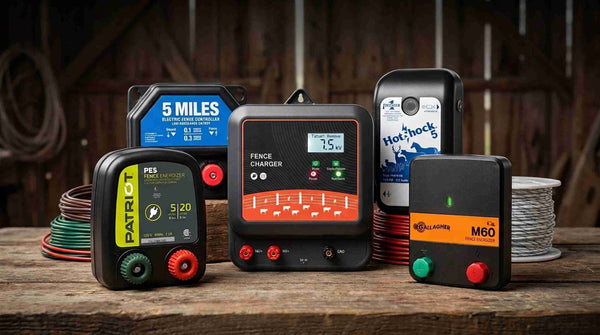
Electric fence energizers are the single most important component of any portable electric netting or wire fence system. Get the joule output wrong, and your animals either walk through or the fence shorts on heavy vegetation and stops working. Get the power source wrong, and you're running extension cords across a pasture or swapping batteries every week when you don't need to. The ten products below were selected for real-world relevance, distinct brand representation, and performance across poultry, deer exclusion, horses, cattle, and pig containment scenarios.
 VetraPulse Multi-Power 2J/3J/5J
Adjustable 2/3/5J • AC/DC • IP65 • LED + Alarm
View Product Zareba 50 Mile AC Charger
2J fixed • AC only • 50-mile rated • Lightning prot.
View on Amazon Parmak Magnum Solar-Pak 12
3.1J • Solar + 12V • 30-mile • Off-grid capable
View on AmazonFull Comparison Table
| # | Image | Product | Output | Power | Range | Weatherproof | Monitor | Price | Link |
|---|---|---|---|---|---|---|---|---|---|
| 1 | |
VetraPulse Multi-Power | 2/3/5J adj. | AC + DC | 6.2 mi | IP65 | LED + Alarm | $129 | Shop |
| 2 | |
Zareba 50 Mile AC | 2J fixed | AC only | 50 mi* | Sealed | LED flash | ~$75 | Amazon |
| 3 |  |
Gallagher M120 AC | 0.63J out | AC only | 15 mi | Basic | LED flash | ~$75 | Amazon |
| 4 | |
Parmak Magnum Solar-Pak 12 | 3.1J | Solar + 12V | 30 mi* | Weatherproof | Indicator | ~$350 | Amazon |
| 5 |  |
Cyclops Brute 8J | 8J fixed | AC only | 8 mi | Heavy-duty | Fuse + LED | ~$200 | Amazon |
| 6 |  |
Happy Henhouse AC | 0.25J | AC only | 2 mi | Weather-resist. | Indicator | ~$45 | Amazon |
| 7 |  |
Epoify 24-Hour Solar | 0.18J | Solar | 10 mi* | Weatherproof | LED flash | ~$65 | Amazon |
| 8 |
 |
Patriot PE-5 AC | 0.5J | AC only | 10 mi* | Basic | LED flash | ~$45 | Search |
| 9 |
 |
Premier 1 Intellishock 60 | 0.6J | AC only | ~25 mi* | Weatherproof | LED flash | ~$75 | Site |
| 10 |
 |
Speedrite 1000S | 1J | AC / DC | ~30 mi* | Weatherproof | LED flash | ~$110 | Search |
* Miles ratings are under ideal clean-wire conditions. Real-world range in heavy vegetation is typically 25–50% of the rated figure.
Pros
- Three selectable output levels in one unit
- Real-time LED screen shows voltage and status
- Built-in alarm for faults, shorts, and wire breaks
- Works on both 110V AC and 12V battery
- IP65 rating outperforms most budget competitors
- 5J output at a fraction of Gallagher/Parmak pricing
Cons
- Newer brand; less long-term user history than Zareba
- 12V battery for DC use is sold separately
- 6.2-mile range at 5J is adequate, not class-leading
What earns the VetraPulse its top spot here is not raw power in isolation. The Cyclops Brute further down this list delivers 8 joules. What makes this unit stand out is the combination of adjustable output, dual power source, and a monitoring system that most products in this price range simply don't offer.
The three-step selector is the piece that resonates most with farmers who have dealt with the lock-in problem before. Someone starting with a small chicken flock running at 2J can dial it up to 5J if they add cattle or need to address deer pressure on a larger perimeter later. That flexibility typically costs $250 to $400 at the Gallagher or Parmak tier. At $129, the gap is significant.
The LED screen is a practical feature, not a gimmick. Most chargers in the $60 to $150 range give you a small blinking indicator light that tells you the unit is pulsing but nothing else. This one shows real-time voltage and status, which means you can see a voltage drop before an animal tests the fence. The integrated alarm takes that further: if there's a short, a broken wire, or an intrusion event, the unit flags it. That kind of proactive monitoring saves real time on a working property.
The AC/DC dual power is the other key differentiator. Running a fence near the barn on grid power and need to take the energizer to a remote pasture next month? Plug it into a 12V deep-cycle battery and go. Most chargers force you to choose one mode at the time of purchase.
IP65 weatherproofing is rated for dust-tight and water-jet protection, one step above the IP54 rating on most budget units. In practice, that means rain, morning dew, and hose-down conditions don't put the unit at risk.
Pros
- Low-impedance design handles heavy vegetation well
- Built-in lightning diverter circuit
- Proven in cattle, pig, and horse containment
- 2-year warranty extendable to 3 with registration
- Widely available, easy to service
Cons
- AC only, no DC or solar option
- Output is fixed at 2J, no adjustment
- Wing nut terminals can loosen on vibrating posts
Zareba has been in the electric fence business for decades, and the 50 Mile AC is the model that appears most consistently in conversations on homesteading forums and agricultural extension recommendations. The 2-joule output through a low-impedance circuit is the right balance for multi-wire cattle fencing with moderate weed contact.
Real-world range in heavy vegetation settles around 10 to 14 miles, roughly a third of the 50-mile rated figure, which is normal for any energizer operating in non-ideal conditions. The lightning diverter has a reputation for surviving what cheaper units don't, which matters in storm-prone regions. If AC power is reliably available near your fence, and you're not going to need portability, the Zareba 50 Mile is a straightforward, reliable pick at its price point.
Pros
- 3-year manufacturer warranty, industry-leading
- UL listed for insurance and code compliance
- Compact 16oz form, easy to mount anywhere
- Built-in lightning protection
- US-based customer support team
Cons
- Only 0.63J output, not suited for heavy weed lines
- AC-only, no portable option
- Some reports of stock availability issues
Gallagher is a New Zealand brand with a global footprint in agricultural fencing, and the M120 is their compact entry-level plug-in energizer for the North American market. The 3-year warranty is the standout here. Most competitors at this price offer one year if anything at all. The UL listing is another practical advantage if you're installing in a barn or outbuilding where insurance requirements apply.
The 0.63-joule output figure is the actual delivered energy, as opposed to the 1.2J stored rating. For horses and light cattle on clean fence lines, it's sufficient. For fence lines with regular weed contact or for thick-coated animals like wool sheep or Boer goats, you'll want to size up. The 15-mile / 60-acre rating assumes clean conditions, and in the real world with moderate vegetation you'll get closer to 8 to 10 miles of reliable charge.
Pros
- 3.1J solar output is class-leading off-grid performance
- Battery backup runs through 5+ cloudy days
- Handles bulls, large horses, and heavy-coated goats
- Heavy aluminum housing for permanent installation
- 30-mile rated range, real-world ~18 miles in moderate weeds
Cons
- No manufacturer warranty on this model
- Battery holder is cardboard and a known weak point
- Heavy unit at 21 x 17 x 11 inches
- Premium price point
If there's no AC power within practical reach of your fence, and the fence needs to hold cattle, horses, or determined pigs, the Parmak Magnum Solar-Pak 12 is the most capable solar option available at a consumer price point. The 3.1-joule output is enough to power 18 to 22 miles of fence in real-world vegetation, which covers most farm and ranch setups comfortably.
The aluminum housing handles outdoor exposure well. The built-in 12V battery charges during daylight and carries the load through night and through cloudy stretches of up to a week or more. The one downside worth noting is the complete absence of any warranty. At this price, that's a risk some buyers will take issue with. Replacing the cardboard battery holder with a plastic battery box early on is recommended by most long-term users.
Pros
- Highest joule output in this roundup
- Strongest class of lightning protection available
- Fuse-protected design, user-repairable in the field
- Holds against the most aggressive livestock testers
- Cult following on homesteading forums for reliability
Cons
- Not compatible with GFCI outlets
- Overkill and overpriced for small setups
- 5-pound weight makes it less portable than other units
The Cyclops Brute is for situations where a lesser charger has already failed. Breeding bulls that have learned to push through fences, large-breed hogs, or properties where thick summer vegetation covers the lower fence wires for months at a time. The 8-joule output is more than any livestock needs on a psychological level, but the headroom means the fence stays hot and respected even when conditions are working against it.
The fuse-protected design is worth highlighting because it's rare. Most modern fence chargers are sealed units. If something fails, you replace the whole thing. Cyclops builds the Brute so the fuse can be swapped out in the field, which has earned it a following among ranchers who run remote fence lines far from a hardware store. The incompatibility with GFCI outlets is a real installation constraint in modern barns. Worth checking your outlet setup before ordering.
Pros
- Lowest price entry point in this ranking
- Effective against raccoons, possums, stray dogs
- Plug-and-play, no setup complexity
- Lightweight and easy to mount on a fence post
Cons
- Only 2-mile range, not for large operations
- 0.25J output is insufficient for pigs or cattle
- Not portable beyond cord reach
This one was designed by people who actually raise chickens, and it shows. Happy Henhouse is a small Missouri-based brand that made this charger specifically for backyard flock owners dealing with predator pressure. The 0.25-joule output is enough to deter raccoons, foxes, and possums reliably. It won't contain cattle, but that's not what it's for.
Plug it into an outdoor GFI outlet, mount it on a post with two screws, and you're done. The 14-ounce body is compact enough to fit in tight spaces, and the 1Hz pulse rate, one shock per second, feels surprisingly strong relative to the joule rating. Within two nights of installation, most predator traffic stops. For small backyard chicken runs, garden perimeters, and anything under 2 miles of fence, this is the simplest solution at the lowest cost.
Pros
- Completely self-contained, no outlet needed
- Stores enough charge for 2 cloudy days
- 360-degree mounting bracket for optimal sun angle
- Moves between paddocks in under 10 minutes
Cons
- 0.18J is not enough to reliably deter cattle or pigs
- Some units report early failure after one season
- Battery capacity in cold weather may reduce output
The Epoify 24-Hour earns a place on this list for one specific use case: sheep, goats, chickens, ducks, and garden protection in remote locations where there's no AC power and a heavier solar unit like the Parmak isn't warranted. The all-in-one design packs panel, battery, and energizer into a 1.44-kilogram unit that mounts on a T-post in minutes.
The 24-hour claim refers to the unit's ability to run through the night on stored solar charge. In practice, it also handles two to three overcast days before voltage starts to drop noticeably. For lightweight livestock applications this is completely adequate. The 0.18J output is genuinely too light for cattle or determined pigs, though. Testing against the latter tends to end with the pig on the wrong side of the fence.
Pros
- Affordable entry into low-impedance performance
- Adequate for horses, goats, and garden fencing
- Simple installation, compact size
- Established brand with North American market presence
Cons
- 0.5J falls short for cattle or thick-coated breeds
- No DC or solar option
- Indicator light only, no display
Patriot Fencing is a North American brand with a solid reputation in the agricultural community, and the PE-5 is their basic plug-in AC energizer. At 0.5 joules with a low-impedance design, it sits between the ultra-budget options like the Happy Henhouse and the mid-range Zareba/Gallagher offerings. It handles horses, dairy goats, and short garden fence runs without issue.
Where this unit fits best is the hobbyist or small-acreage farmer who wants something more capable than the sub-0.25J options but doesn't need the output or features of a $75 to $130 unit. The price reflects that positioning accurately. It's not the most feature-rich unit in this ranking, but it's dependable and backed by a brand that handles warranty claims.
Pros
- Designed to pair with Premier 1 electric netting products
- Strong brand ecosystem for accessories and replacement parts
- Well-regarded in the sheep and poultry farming community
- Good customer support from a specialist fencing company
Cons
- Primarily sold direct, not widely available on Amazon
- Output level not ideal for cattle without clean fence lines
- Higher shipping cost if buying outside North America
Premier 1 Supplies is a Minnesota-based company that has spent decades focused specifically on electric fencing and netting for sheep, poultry, and rotational grazing operations. Their Intellishock 60 is designed to work as part of their own electric netting ecosystem, which includes fence kits, testing equipment, and support resources built around real farm use cases.
The primary appeal here is not just the energizer itself, but the support infrastructure behind it. Premier 1 publishes detailed installation guides, offers product support by phone, and their online resources are among the best available for anyone new to electric netting. If the plan involves portable electric netting for sheep or poultry and a single-brand ecosystem makes life easier, this is worth the look.
Pros
- AC and DC dual power support
- Professional-grade construction standards
- 1J output works for horses and light cattle
- Part of Datamars group with global support presence
Cons
- Fixed 1J output with no adjustment option
- Availability can be inconsistent in the US market
- No built-in display or alarm system
Speedrite sits under the Datamars group, a global agricultural technology company with roots in New Zealand. The 1000S is their mid-range dual-power unit, and it occupies a niche between the budget-end AC-only options and the premium adjustable units. The AC/DC dual power is an advantage that moves it above the Patriot and Premier 1 entries, but the fixed 1J output and lack of any monitoring system place it behind the VetraPulse when flexibility and farm-management features are factored in.
For a farm that wants professional-grade build quality at a step below the premium tier, and that needs the option to switch between mains power and battery without buying two units, the 1000S is worth considering. Availability varies by region, and support response can be slower than US-based brands.
Buying Guide: What Actually Matters When Choosing a Portable Electric Fence Charger
The spec sheet on any electric fence charger can look deceptively similar across the price range. Joule numbers, mile ratings, and weatherproof claims don't always tell the full story of how a unit performs in the field. Below are the factors that separate a good buy from one that fails within a season.
Joule Output: Stored vs. Delivered
Some manufacturers list stored energy, others list output energy. The output figure is what actually reaches the wire. Look for output joules when comparing. A 1.2J stored unit might deliver only 0.6J, putting it in a different category than a unit that lists 1J output directly.
Weed Load and Real-World Range
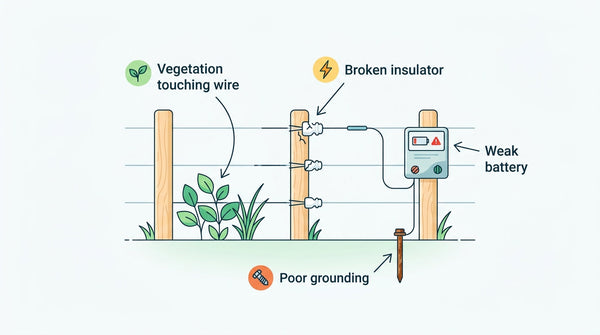
Rated range is calculated under ideal conditions with clean, dry wire. In practice, grass and weeds touching the lower wire act as a partial short. A charger rated for 30 miles in clean conditions may deliver reliable charge for only 8 to 15 miles when vegetation is heavy. Size up for real-world use.
Power Source: Match It to Your Setup
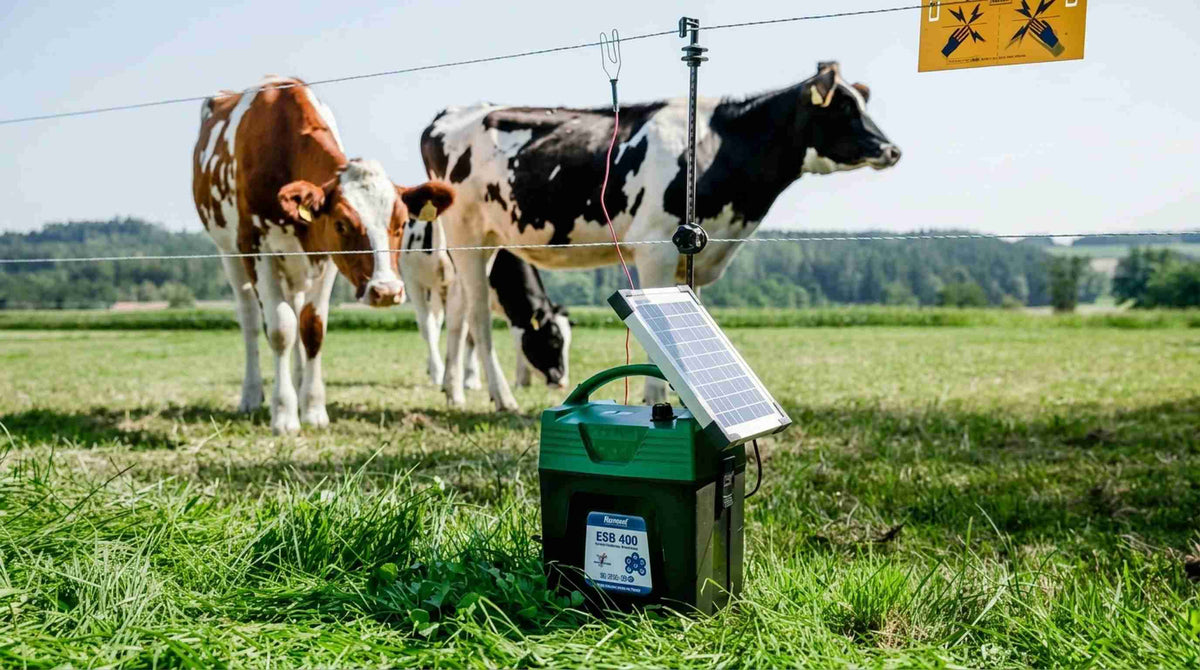
AC is reliable and constant when you have an outlet nearby. DC battery is portable and flexible for short runs. Solar with battery backup is the right choice for remote pastures. Dual AC/DC units give you both options without buying two chargers, which matters if your setup changes seasonally.
IP Weatherproof Rating
IP54 means dust-resistant and splash-proof. IP65 means fully dust-tight and water-jet resistant. If the charger will be mounted outdoors in a location exposed to rain or hose wash, IP65 is the minimum worth targeting. IP54 works in covered or sheltered installations.
Monitoring and Alerts
A simple LED flash tells you the unit is pulsing but nothing else. An LED display that shows real-time voltage tells you how the fence is actually performing. A fault alarm tells you when there's a short, a wire break, or an intrusion before an animal gets out. Better monitoring saves real time and prevents escapes.
Adjustable vs. Fixed Output
Fixed-output units are optimized for one scenario. Adjustable output lets you dial back energy for sensitive animals like poultry or horses, and dial up for thick-coated animals or heavy weed conditions. Farms that keep multiple livestock types or plan to expand benefit most from an adjustable unit.
Which Charger for Which Animal
| Animal | Min. Joules | Recommended | Key Consideration | Best Pick from This List |
|---|---|---|---|---|
| Chickens / Ducks | 0.1J | 0.15–0.25J | Need low-ground contact, predator deterrence | Happy Henhouse, Epoify Solar |
| Sheep | 0.15J | 0.3–0.5J | Wool insulates; use netting over single-wire | Patriot PE-5, Premier 1 Intellishock 60 |
| Goats | 0.5J | 1–2J | Thick coats and determined escape artists | VetraPulse, Zareba 50 Mile |
| Horses | 0.5J | 0.5–1J | Highly sensitive; good ground is critical | Gallagher M120, VetraPulse 2J setting |
| Cattle (general) | 1J | 1–2J | Size up for thick hide in wet conditions | VetraPulse, Zareba 50 Mile |
| Bulls (aggressive) | 2J | 2–5J | Determined testers; need maximum voltage | VetraPulse 5J setting, Cyclops Brute |
| Pigs / Hogs | 1J | 2–5J | Thick skin; lower wires must stay clear of soil | VetraPulse 3–5J setting, Cyclops Brute |
| Deer Exclusion | 0.5J | 0.5–1J | Bait wires with peanut butter for best results | Zareba 50 Mile, Gallagher M120 |
Joule Output Comparison
Maximum Output Joules by Charger
VetraPulse listed at its maximum 5J setting. Cyclops leads in raw joules, but is fixed-output and AC-only at 2x the price.
★ VetraPulse output is user-selectable between 2J / 3J / 5J. Chart shows maximum setting.
Power Source Distribution Across All 10 Chargers
How the 10 ranked chargers break down by power source type.
Zareba, Gallagher, Cyclops, Happy Henhouse, Patriot, Premier 1
VetraPulse, Speedrite 1000S
Epoify 24-Hour Solar
Parmak Magnum Solar-Pak 12
The Bottom Line
Most farms that raise mixed livestock, or plan to expand, end up buying two or three chargers over five years because their first purchase was under-specced and their second was the wrong power source. An adjustable-output, dual-power unit with monitoring features eliminates most of those mistakes at the first purchase.
For properties that already have a clear, unchanging use case, a fixed-output AC unit from a proven brand like Zareba or Gallagher is a simpler and equally valid choice. For anything off-grid at serious scale, the Parmak Magnum Solar-Pak 12 is the solar benchmark. And for a chicken coop or small garden, the Happy Henhouse or Epoify get the job done without overspending.
Frequently Asked Questions
What is the difference between stored joules and output joules?
Can electric netting be used with any fence charger?
How often should an electric fence voltage be checked?
What is low-impedance technology and why does it matter for weed pressure?
Is a solar fence charger reliable through winter or consistently cloudy climates?
How many ground rods does an electric fence charger need?
Can the same fence charger be used for both poultry and cattle?
What type of wire or netting works best with a portable electric fence charger?
Sources & References
- Michigan State University Extension: Electric Fencing for Livestock — Joule and voltage guidelines for different animal types
- Penn State Extension: Electric Fencing Basics — Low-impedance technology, grounding requirements, and weed management
- Clemson Cooperative Extension: Fencing for Livestock — Animal-specific containment and energizer sizing guidance
- USDA NRCS Practice Standard: Electric Fence Design and Installation Guidelines
- Premier 1 Supplies: Electric Fence Resource Guide — Netting compatibility, rotational grazing setup, joule requirements per species
- VetraPulse Product Page: Multi-Power 2J/3J/5J Electric Fence Charger — Product specifications and comparison data
- Model Rec: Best Electric Fence Chargers 2026 — Cross-referenced product data and real-world testing observations