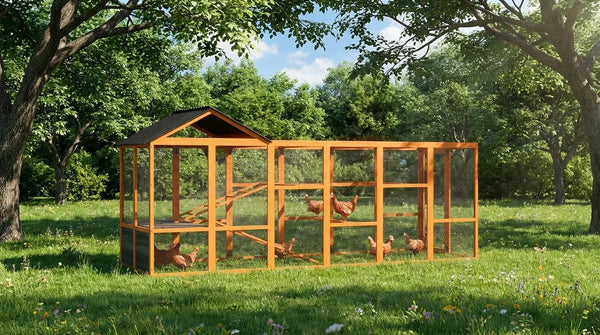
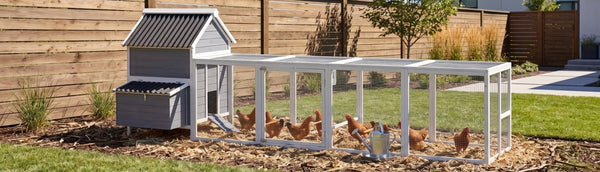
Best Chicken Coop Setup for Backyard Poultry
Everything you need to house a happy, healthy flock — from sizing and ventilation to predator-proofing and nesting boxes.
Whether you're planning your very first flock or upgrading an aging structure, getting your chicken coop setup right from the start is the single most impactful decision you'll make as a backyard poultry keeper. We've included data-backed stats, real-world keeper experiences, and side-by-side comparisons so you can make a confident, informed decision.
FROM¹ NASS Poultry Survey, 2023 · ² Penn State Extension Poultry Health Report, 2022 · ³ University of Georgia Cooperative Extension, Lighting for Poultry, 2023
Why the Right Coop Setup Matters
Chickens are remarkably adaptable animals — but they are not indestructible. Respiratory diseases like Mycoplasma gallisepticum thrive in damp, poorly ventilated spaces. Predators ranging from raccoons and foxes to hawks account for significant flock losses every year. And chronic stress from overcrowding suppresses egg production measurably, sometimes reducing output by 20–30% in a flock that is otherwise healthy.
The good news: every one of these risks can be dramatically reduced with a thoughtful coop design. Think of your chicken coop as a multi-system piece of infrastructure — shelter, security, environmental control, and behavioral enrichment all in one structure.

Sizing Your Coop Correctly
Overcrowding is one of the most common mistakes first-time chicken keepers make. The instinct is understandable — you want to house as many hens as possible in the space available. But cramped conditions lead to feather pecking, disease transmission, egg eating, and reduced laying rates.
Space Requirements by Chicken Type
| Breed Size | Min. Indoor Space / Bird | Min. Run Space / Bird | Typical Examples |
|---|---|---|---|
| Bantam | 2 ft² (0.19 m²) | 4 ft² (0.37 m²) | Silkies, Seramas |
| Standard / Light | 4 ft² (0.37 m²) | 8–10 ft² | Leghorns, Sussex |
| Standard / Heavy | 4–5 ft² (0.46 m²) | 10 ft² | Australorps, Barred Rocks |
| Large / Heritage | 5–6 ft² | 12 ft² | Jersey Giants, Brahmas |
Source: USDA Agricultural Research Service · University of Florida IFAS Extension, Backyard Chickens Fact Sheet (2023)
The "Rule of 10" for Coop Planning
A practical rule used by experienced keepers: take your planned flock size, multiply by 10, and that's your minimum total coop + run square footage. So 6 standard hens = 60 ft² combined. It's a simplified heuristic but guards against the most common sizing errors.

Ventilation & Airflow 🌬️
Ventilation is, without exaggeration, the single most important design element of any chicken coop. Chickens exhale moisture-laden air constantly and produce ammonia-rich droppings around the clock. Without adequate airflow, humidity builds to levels that promote respiratory infections, coccidiosis, and frostbite in winter (counterintuitively — damp cold is far more damaging than dry cold).
Minimum Ventilation Standards
The widely adopted standard from poultry extension programs is 1 square foot of ventilation opening per 10 square feet of floor space. However, many experienced keepers recommend doubling that figure — 2 ft² per 10 ft² — especially in humid climates or if you keep heavy breeds.
Predator-Proofing Your Chicken Coop 🦊
Predator attacks are devastating — both emotionally and practically. According to data collected by the National Agricultural Statistics Service (NASS), predator losses account for the majority of non-disease backyard flock deaths annually. The most common culprits: raccoons, opossums, foxes, dogs, weasels, and aerial predators like hawks and owls.

The Predator-Proofing Hierarchy
- Use ½-inch hardware cloth, not chicken wire. Chicken wire keeps chickens in but stops almost nothing — raccoons and weasels can reach through, and determined predators can tear it open. Hardware cloth is the industry standard for predator-proofing.
- Bury an apron or use a skirt. Foxes, dogs, and coyotes are persistent diggers. Bury hardware cloth 12 inches down around the perimeter, or bend it outward 12 inches along the ground. This "apron" foils virtually all digging attempts.
- Install a secure latch. Raccoons can open simple hook-and-eye latches with surprising ease. Use a carabiner, padlock, or two-step latch on every door and panel.
- Seal every gap larger than ½ inch. Weasels and snakes can enter through surprisingly small openings. Inspect all junctions, corners, and roof edges carefully.
- Cover the run from above. Aerial predators are a serious risk for free-range and run-housed birds. Hardware cloth or welded wire roof panels protect against hawks and owls.
- Consider a motion-activated light or alarm. Nocturnal predators are deterred by sudden light. Motion sensor lights positioned around the coop are an inexpensive and highly effective deterrent.
| Predator | Entry Method | Primary Defense |
|---|---|---|
| Raccoon | Unlatch doors, reach through mesh | Carabiner latches + ½" hardware cloth |
| Fox / Coyote | Digging under fence/coop | Buried apron, 12" depth |
| Weasel / Mink | Squeeze through small gaps | Seal all gaps >½", ½" hardware cloth |
| Hawk / Owl | Aerial dive, open-top runs | Covered run roof |
| Dog | Force entry, digging, biting through mesh | Heavy-gauge hardware cloth + buried apron |
| Snake | Small gaps, seeking eggs or chicks | Seal all gaps, hardware cloth base |
Nesting Boxes & Roost Bars 🥚
Getting nesting boxes and roost bars right has a direct impact on egg production quality, cleanliness, and flock behavior. These two features are often undersized or overlooked in budget coop designs.
Nesting Box Sizing & Ratio
The standard recommendation is one nesting box for every 4–5 hens. While chickens are notorious for all wanting the same box simultaneously, having adequate numbers prevents queue-related stress and egg breakage. Each box should measure approximately 12 × 12 × 12 inches for standard breeds (larger for Jersey Giants or Brahmas).
Roost Bar Specifications
Roost bars should be 2–4 inches wide with rounded (not sharp) edges — chickens don't grip like songbirds; they rest flat-footed on the bar. Allow at least 8–10 inches of bar length per hen, and position bars 18–24 inches above the floor for standard breeds, or up to 36 inches for particularly agile flocks.

Flooring & Bedding Options 🌾
The floor of your coop is your first line of defense against moisture accumulation, disease, and burrowing predators. The right bedding choice makes a significant difference in the ease of daily management and the long-term health of your flock.
| Bedding Material | Absorbency | Dust Level | Composting Value | Cost | Best For |
|---|---|---|---|---|---|
| Pine Shavings | ⭐⭐⭐⭐ | Low | High | $ | Most backyard coops |
| Straw | ⭐⭐ | Very Low | Medium | $ | Nesting boxes |
| Hemp Bedding | ⭐⭐⭐⭐⭐ | Very Low | High | $$$ | Respiratory-sensitive birds |
| Sand | ⭐⭐⭐ | None | Low | $ | Hot, dry climates |
| Deep Litter Method | ⭐⭐⭐⭐⭐ | Variable | Very High | $ | Cold climates, large coops |
Source: Penn State Extension, Poultry Bedding Options & Management (2022)
Never Use Cedar Shavings
Cedar produces aromatic oils (phenols) that are toxic to chickens' respiratory tracts over time. Always choose pine, aspen, or purpose-made poultry bedding.
Lighting & Heating 💡
Egg production in chickens is regulated almost entirely by day length. Hens need approximately 14–16 hours of light per day to maintain consistent laying. In winter months when natural daylight drops below this threshold, supplemental lighting can extend your egg season significantly.
Supplemental Lighting Guidelines
- Use a low-wattage LED bulb (25–40 watts equivalent) on a timer set to turn on before dawn rather than after dusk — this mimics natural light extension without disrupting sleep patterns.
- Position the bulb so it illuminates the whole coop evenly, including the nesting area.
- Avoid sudden lighting changes — ramp up gradually if introducing artificial light mid-season.
Heating: Less Than You Think
Healthy adult chickens (most standard breeds) are well-adapted to cold temperatures and can tolerate down to 0°F (-18°C) if the coop is dry and draft-free. The primary winter coop concerns are moisture and frostbite on large combs, not temperature per se.

Chicken Coop Types: Side-by-Side Comparison 🏡
Not all coops are created equal. The right coop style depends on your flock size, available space, climate, and how much time you want to spend on daily management.
| Feature | Stationary Coop | Chicken Tractor | Walk-In Coop | Converted Shed |
|---|---|---|---|---|
| Flock Size | 4–20 birds | 2–6 birds | 10–50+ birds | 10–30 birds |
| Predator Security | ⭐⭐⭐⭐ | ⭐⭐⭐ | ⭐⭐⭐⭐⭐ | ⭐⭐⭐⭐ |
| Portability | None | High | None | None |
| Ventilation Control | Medium | Low | High | Very High |
| Initial Cost | $$ | $ | $$$ | $$–$$$ |
| Ease of Cleaning | Medium | Medium | Very Easy | Easy |
Real-World Case Studies 📖
The best evidence for what works in coop design comes from keepers who've made the mistakes — and the upgrades. Here are three real-world scenarios from backyard poultry keepers who shared their experiences.
Sarah started with a kit coop advertised for "up to 8 hens" — a marketing claim she quickly learned to distrust. Ventilation was minimal, and the first wet Pacific Northwest winter brought chronic respiratory illness to three of her birds within two months.
She upgraded to a stationary 8×6 coop with a 16×10 attached run, added ridge venting and three hardware-cloth windows, and installed deep pine shaving bedding with the deep litter method. Respiratory issues cleared within three weeks of the move.
James had lost four hens to raccoon predation in a single week before identifying the entry point — a gap at a roof-wall junction just over 2 inches wide. He had been using standard chicken wire on the run. A complete hardware cloth re-wrap, burial of a 12-inch ground apron, and installation of double-step carabiner latches on all doors ended the losses entirely.
"I counted on the rooster to sound the alarm," he noted. "Didn't account for attacks happening fast enough that the alarm didn't matter." He added a motion-activated floodlight as a final deterrent.
Linda and Greg researched extensively before building, opting for a walk-in style converted garden shed with proper ventilation installed from the start. They positioned nesting boxes lower than roost bars, used hemp bedding for its low-dust properties, and ran LED supplemental lighting from November through February on a timer.
"We wanted to get everything right the first time and not pay for it twice," Linda said. They consulted local extension resources and planned for six birds even though they started with four.

Frequently Asked Questions 🙋
How often should I clean my chicken coop?
With the deep litter method and adequate flock size to keep the bedding turning, you may only need a full cleanout every 6–12 months. With conventional bedding management, a full cleanout every 3–4 months, with spot-cleaning of wet areas and dropping boards cleaned weekly. Nesting box material should be refreshed every 2–4 weeks. Daily removal of droppings under roost bars dramatically reduces ammonia buildup and overall coop workload.
Can I keep chickens in a small backyard?
Yes — even a modest backyard can support a small flock of 3–4 bantam or light-breed hens. The key is choosing appropriate breeds (quieter, smaller bantams are excellent for urban settings), ensuring the run is covered and secure to prevent noise-related neighbor concerns, and checking your local zoning ordinances. Many cities allow up to 6 hens (no roosters) in residential areas. A well-managed small flock in 150–200 sq ft of total space is entirely achievable.
What is the deep litter method for chicken coops?
The deep litter method involves building up layers of carbon-rich bedding (pine shavings, dry leaves, straw) over time — typically to a depth of 6–12 inches — and allowing beneficial microorganisms to break down droppings in place. The result is a composting process that generates gentle warmth, reduces ammonia, and dramatically reduces the frequency of full cleanouts. It works best in coops with adequate ventilation and a minimum of 4–6 square feet per bird. The resulting compost is an excellent garden amendment.
Sources & Further Reading
1. USDA National Agricultural Statistics Service (NASS), Poultry Loss Survey, 2023 · 2. Penn State Extension, Ventilation for Poultry Housing, 2022 · 3. University of Georgia Cooperative Extension, Lighting for Backyard Poultry, 2023 · 4. University of Florida IFAS Extension, Backyard Chickens Fact Sheet, 2023 · 5. Penn State Extension, Poultry Bedding Options & Management, 2022