The Light Stimulation Causes Chickens to Lay Eggs: Do Chickens Prefer Light or Darkness at Night? 🐓
Light stimulation is the primary biological trigger that causes chickens to lay eggs. However, a common misconception among enthusiastic beginners is that more light equals more eggs, leading to the dangerous practice of keeping coops illuminated 24/7. So, do chickens prefer light or darkness at night?
In this comprehensive guide, we will dive deep into the science behind light stimulation, uncover the crucial importance of total darkness for poultry health, analyze real-world case studies, and guide you on how to optimize your coop environment for maximum egg yield and animal welfare.

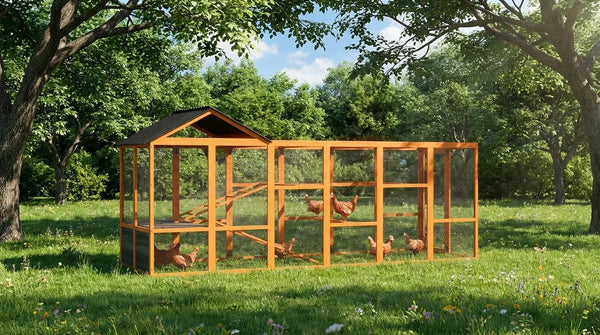
Sunlight plays a crucial role in triggering the hormonal cascade required for egg production.
The Science: How Light Stimulation Causes Chickens to Lay Eggs
To understand why light makes chickens lay eggs, we have to look inside their biology—specifically, at a tiny structure located in the brain called the pineal gland.
The Role of the Pineal Gland and Photoreceptors
Unlike humans, who primarily receive light through their eyes, chickens possess specialized extra-retinal photoreceptors. This means that light literally penetrates the chicken's skull (which is relatively thin) and directly stimulates the pineal gland and the hypothalamus.
When the pineal gland registers a specific duration of light (known as the photoperiod), it triggers the hypothalamus to release a hormone called Gonadotropin-Releasing Hormone (GnRH). This hormone signals the pituitary gland to produce follicle-stimulating hormones (FSH) and luteinizing hormones (LH), which ultimately tell the hen's ovary to mature and release a yolk.
Spectrum Matters: Red Light vs. White Light
Not all light is created equal. Research demonstrates that the reproductive axis of poultry is most responsive to the red spectrum of light (around 600-700 nanometers). Red light penetrates the skull more effectively than blue or green light. While a standard warm-white LED bulb provides enough of the red spectrum to stimulate laying, specific red lights can keep hens calm, reduce aggressive pecking, and still promote excellent egg yields.
Do Chickens Prefer Light or Darkness at Night?
If 16 hours of light creates maximum egg production, you might be tempted to leave a light on in the coop 24 hours a day. Do not do this. Chickens unequivocally prefer—and biologically require—darkness at night.
1. They Lack True Night Vision
From an evolutionary standpoint, chickens are highly vulnerable to predators at night. They have notoriously poor night vision. When the sun goes down, their natural instinct is to roost high up in a dark, secure place and enter a state of deep sleep. A coop flooded with artificial light at night causes severe confusion, anxiety, and stress, as the birds cannot instinctively settle down.
2. The Melatonin Cycle and Immune Health
Just like humans, chickens require darkness to produce melatonin. Melatonin is a critical antioxidant hormone that regulates their circadian rhythm, repairs cellular damage, and boosts the immune system.
- 🌿 Rest period: A chicken requires at least 6 to 8 hours of total, uninterrupted darkness in every 24-hour cycle.
- 🌿 Health risks of 24/7 light: Flocks exposed to continuous light suffer from sleep deprivation, severe immunosuppression, weight loss, feather pecking, cannibalism, and ultimately, a significantly shortened lifespan.

A secure, pitch-black coop at night is essential for the flock's immune system and stress reduction.
Natural Light vs. Artificial Light Management
To help you understand the balance between light and dark, here is a breakdown of how seasonal changes impact your flock, and how you should react.
| Season | Natural Light Hours | Egg Production Level | Action Required for Keepers |
|---|---|---|---|
| Spring/Summer | 14 - 16 Hours | Peak Production 📈 | None. Allow natural dawn to dusk cycles. Ensure coop is dark at night. |
| Autumn (Molting) | 10 - 12 Hours | Low/Stopped 📉 | Allow resting phase. Birds need energy to regrow feathers. Avoid lighting. |
| Winter | 8 - 10 Hours | Minimal to None 🛑 | Add supplemental morning light (e.g., 4 AM to 8 AM) to reach 14 hours total. |
Real-World Case Study: The Vermont Winter Flock
To illustrate the dramatic impact of proper light management, let's look at a documented case study of two identical backyard flocks of Rhode Island Reds in Vermont (a region known for harsh, dark winters).
- 🐔 Flock A (Natural Only): Relied purely on natural winter sunlight (approx. 9 hours of daylight). By mid-December, egg production dropped from 6 eggs per week per hen down to exactly 0 to 1 egg per week.
- 🐔 Flock B (Managed Lighting): The keeper installed a simple timer-controlled warm LED bulb inside the coop. The light turned on at 4:00 AM and turned off at 8:00 AM when the sun came up, providing a total of 14 hours of light. Result: Production stabilized at an impressive 4 to 5 eggs per week per hen throughout the freezing winter.
Crucial Takeaway: The keeper of Flock B added light in the morning rather than the evening. Why? Because if artificial lights suddenly shut off at 8:00 PM, the chickens are plunged into total darkness while still on the floor, leaving them unable to find their roosts. Morning light allows for a natural dusk transition so birds can roost safely.
🏡 Essential Gear for a Happy, Healthy, and Productive Flock
Managing the light and dark cycles of your flock isn't just about screwing in a lightbulb. The physical environment, nutrition, and mental stimulation of your chickens play a synergistic role in their overall productivity.
1. The Ultimate Fortress: Premium Chicken Coops
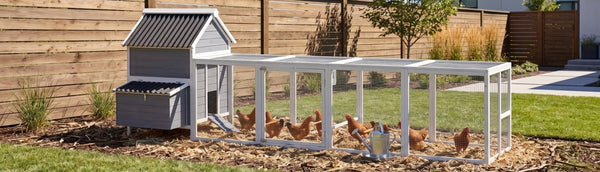
A high-quality coop serves a dual purpose: it protects birds from predators and allows you to strictly control their light exposure. A well-ventilated but light-blocking coop ensures that when the sun goes down, your flock gets the absolute darkness they crave to produce melatonin and rest.
View Chicken Coops2. Synergy of Light and Nutrition: Poultry Feeders
When you artificially extend the daylight hours to stimulate egg laying, your hens' metabolic rates remain high. Laying an egg takes immense energy and calcium. Therefore, extending light must be paired with constant, reliable access to high-quality layer feed. Our efficient feeders prevent waste and ensure your hens have the fuel they need when the lights turn on at 4 AM.
Shop Poultry Feeders3. Winter Enrichment: Wooden Chicken Playset
If you live in a cold climate, winter means your chickens will spend more of their waking (and artificially lit) hours confined to the coop or a covered run. Boredom leads to destructive behaviors like feather pecking. Adding structural enrichment mimics a natural foraging environment, keeping their minds sharp and bodies active.
Get the Chicken Playset
Combining structural security, proper nutrition, and perfect lighting is the key to backyard farming success.
Frequently Asked Questions (FAQ)
How many total hours of light do chickens need to lay eggs?
Hens require between 14 to 16 hours of continuous light per day to maintain peak egg production. Anything less than 12 hours will usually cause a significant drop or complete halt in laying.
Can I just use a regular LED bulb from my house?
Yes, a standard "warm white" LED bulb (around 2700K to 3000K) works perfectly. It emits enough of the red-light spectrum needed to stimulate the pineal gland. Make sure the bulb and fixtures are properly rated for dusty, agricultural environments to prevent fire hazards.
Should I put the light on a timer in the morning or the evening?
Always add supplemental light in the early morning. For example, set a timer to turn the light on at 4:00 AM and off at 8:00 AM. This allows the chickens to experience a natural sunset in the evening, triggering their instinct to roost safely before total darkness sets in.
Will forcing my chickens to lay in the winter shorten their lifespan?
Yes, slightly. A hen is born with a finite number of ova (eggs). By using artificial light to skip their natural winter resting phase, they will lay more eggs in their first two years but may cease laying entirely at an earlier age. Many backyard keepers choose to let their flocks rest in the winter to promote longevity.
Why is my chicken not laying even with 14 hours of light?
Light is just one factor. If a hen is receiving 14 hours of light but still not laying, she may be molting (shedding feathers), experiencing extreme stress, suffering from parasites, or lacking crucial protein and calcium in her diet. Ensure you are using reliable poultry feeders with layer-specific feed.
Is pitch black darkness required, or is a small nightlight okay?
Pitch black darkness is highly recommended. Even faint artificial light from a streetlamp shining through a coop window can disrupt their melatonin production. Ensure your coop windows have shades or are positioned away from artificial night lights.
Conclusion: Respecting the Natural Rhythms
The relationship between a chicken's biology and the sun is a marvel of nature. The light stimulation indeed causes chickens to lay eggs by activating hormonal pathways deep within their brains. However, answering the question, "Do chickens prefer light or darkness at night?" is crucial for ethical poultry keeping: They absolutely need darkness.
By mimicking natural daylight hours with careful supplemental morning lighting, and guaranteeing 6 to 8 hours of total restorative darkness at night, you strike the perfect balance. You secure a steady supply of fresh eggs while deeply respecting the biological and psychological needs of your flock.
Are you ready to upgrade your backyard farming experience? Ensure your flock has the best environment possible by exploring the premium coops, feeders, and enrichment tools available at VetraPulse.