Best Solar Electric Fence Chargers for Remote Farms
Running a fence charger on a remote farm — means you simply cannot rely on grid power. Solar electric fence chargers have become the go-to solution for off-grid livestock protection, and for good reason: they're reliable, low-maintenance, and increasingly powerful.
This guide covers everything you need to know about selecting the best solar electric fence charger for your remote farm in 2026: how joule ratings work, what to look for in a solar panel, which animals need what coverage, real case studies from farmers who've made the switch, and answers to the questions we hear most often.
- Why Solar for Remote Farms?
- How a Solar Fence Charger Works
- Understanding Joules: The Most Important Spec
- Solar vs. Battery vs. AC Chargers — Full Comparison
- VetraPulse Solar Charger — Our Top Pick
- Choosing by Animal Type & Acreage
- Installation Tips for Remote Locations
- Real Farm Case Studies
- Long-Tail Buying Considerations
- Frequently Asked Questions (FAQs)
- Shop VetraPulse by Category
1. Why Solar for Remote Farms?
If your pastures sit more than a few hundred feet from any building, running buried cable to power a plug-in energizer is often cost-prohibitive. Electricians typically charge $10–$25 per linear foot for buried outdoor cable installation — making a half-mile run easily a $25,000+ project before even buying the charger itself.
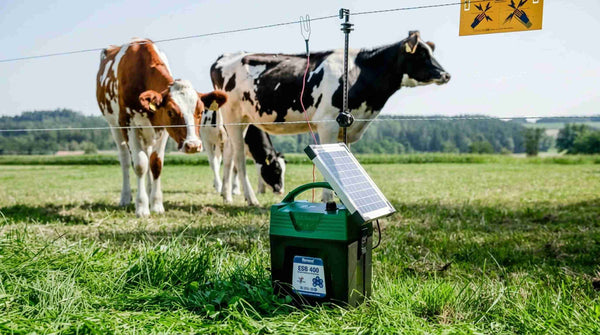
Solar fence chargers eliminate that cost entirely. A quality solar energizer sits directly on or near the fence line, charges its internal sealed lead-acid (SLA) or lithium battery via a mounted solar panel, and pulses the fence continuously — day and night, rain or shine, as long as the battery maintains a charge.

Key advantages of solar fence chargers for remote farms include:
- Zero running cost — once installed, sunlight is free
- No trenching or buried cable — install in hours, not days
- Portability — move it between paddocks as you rotate livestock
- Low maintenance — sealed batteries and solid-state electronics last years
- Scalable — add more energizers as your acreage grows
- Environmentally friendly — zero direct emissions during operation
2. How a Solar Electric Fence Charger Works
A solar fence charger (also called a solar fence energizer) converts sunlight into stored electrical energy, then releases that energy as precisely timed, high-voltage pulses along your fence line. Here's the complete circuit in simple terms:

The solar panel — typically 2W to 10W for livestock chargers — charges an internal sealed lead-acid battery during daylight hours. The energizer module draws from this battery 24 hours a day, releasing a 1-second pulse (approximately 0.003 seconds of actual current) at voltages between 3,000V and 10,000V, at very low amperage. This low-amperage, high-voltage pulse is physically startling but not dangerous to animals or humans under normal conditions.
3. Understanding Joules: The Most Important Spec
When comparing solar electric fence chargers, joules (J) of stored energy is the single most important number to understand. It tells you how powerful the pulse is — and by extension, how far the fence can run and how well it works through vegetation and resistance.
| Stored Energy | Suitable For | Max Fence Length | Handles Vegetation? | Typical Animals |
|---|---|---|---|---|
| 0.1 – 0.3J | Small paddocks, gardens | ~1 – 2 miles | Light only | Chickens, rabbits, small pets |
| 0.3J VetraPulse Solar | Smallholdings, hobby farms | 1.86 miles | Moderate | Poultry, sheep, goats, small livestock |
| 1 – 2J | Medium farms, mixed livestock | 5 – 15 miles | Good | Cattle, horses, pigs |
| 3 – 5J | Large ranches, predator control | 25 – 50 miles | Excellent | Cattle, bison, wolves, bears |
How Vegetation Affects Your Joule Requirement
Each blade of grass touching your fence wire bleeds energy to ground. A heavily weeded 1-mile fence line can lose as much as 60–80% of available joule output to vegetation. This is why farm professionals often size up by at least one joule category when installing in areas with seasonal tall grass. Pairing your solar charger with proper fence maintenance — and a reliable grounding system — is just as important as the charger specification itself.
4. Solar vs. Battery vs. AC Chargers — Full Comparison
| Feature | Solar Charger | Battery-Only Charger | AC (Mains) Charger |
|---|---|---|---|
| Remote Use | Excellent | Good | Poor |
| Running Cost | $0 after install | Battery replacement cost | ~$30–90/year electricity |
| Upfront Cost | $$$ | $$ | $ |
| Maintenance | Very Low | Medium (battery swaps) | Low (if near outlet) |
| Performance in Cloud | Good (battery backup) | Same as solar | Unaffected |
| Portability | Excellent | Excellent | Poor |
| Best for Remote Farms | ✔ Yes | Only short-term | ✘ No |
For remote farms where grid power is unavailable or impractical, solar fence chargers are the clear winner. Battery-only chargers work as a short-term or backup solution, but require weekly to monthly battery swaps — impractical on large properties. AC chargers simply aren't an option off-grid.
5. VetraPulse Solar Charger — Our Top Pick for 2026
VetraPulse 0.3J Solar Electric Fence Charger
0.3J stored energy · 1.86-mile coverage · Built-in solar panel · Sealed SLA battery · Weather-resistant housing · Easy one-post mounting
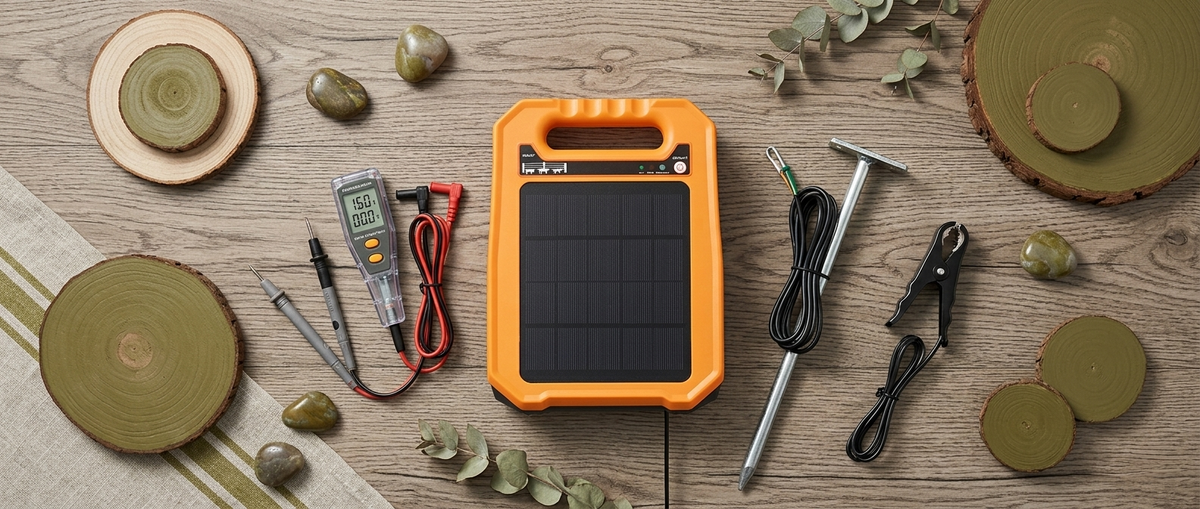
☀️ View Solar ChargerThe VetraPulse Solar Electric Fence Charger is purpose-built for hobby farms, smallholdings, and remote livestock paddocks up to 1.86 miles. The integrated solar panel and sealed battery mean you mount it once and it simply works — no wiring to a structure, no battery swaps, no power bills. The weather-resistant enclosure handles rain, dust, and temperature swings common to farm environments.
6. Choosing by Animal Type & Acreage
Not all livestock require the same fence voltage or configuration. Here's a quick-reference guide to matching your solar charger to your animals and acreage:
| Animal | Recommended Joules | Fence Type | Min. Voltage at Wire | Notes |
|---|---|---|---|---|
| 🐔 Poultry (chickens, ducks) | 0.1 – 0.3J | Electric Netting | 2,500V | Use netting to prevent squeeze-through |
| 🐑 Sheep & Goats | 0.3 – 1J | Netting or multi-wire | 3,500V | Wool insulates — need higher voltage |
| 🐖 Pigs | 0.5 – 1J | Multi-wire low | 3,000V | Train pigs to respect fence early |
| 🐂 Cattle (beef) | 1 – 3J | Electric Fencing | 2,000V | Large animals need coverage up to 50 miles |
| 🐴 Horses | 1 – 2J | Tape or rope | 2,000V | High visibility tape reduces panic runs |
| 🦊 Predator control | 2 – 5J | Multi-wire tight | 5,000V+ | Lower wires target coyotes, fox, dogs |

7. Installation Tips for Remote Locations
Even the best solar charger underperforms with a poor installation. These field-tested tips come from experienced livestock farmers and the VetraPulse technical support team:
Solar Panel Positioning
Mount the solar panel facing true south (in the Northern Hemisphere) at an angle equal to your latitude for maximum year-round output. In northern states (Montana, Minnesota), a 45–50° tilt helps capture low winter sun. Avoid any shading from trees, buildings, or tall fence posts — even partial shading can cut output by 50%.
Grounding: The Most Underrated Component
Poor grounding causes more fence failures than any other issue. The rule of thumb is 3 feet of ground stake per joule of energizer output, with stakes spaced 10 feet apart. In dry sandy soils, double this recommendation. Connect all stakes in series with a ground wire, and test with a fence tester after installation.
Pairing Solar Chargers with Electric Netting
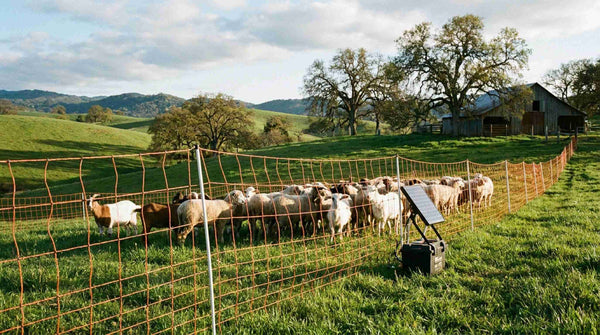
For poultry and small livestock operators, combining the VetraPulse Solar Charger with VetraPulse Electric Netting creates a self-contained, fully portable containment system. Move the entire setup — charger, netting, stakes — to fresh pasture every few days to support rotational grazing without any infrastructure investment.

8. Real Farm Case Studies
The following accounts are representative of common scenarios shared by VetraPulse customers and published in farming community forums. Names and minor details have been generalized for privacy, but the setups and outcomes reflect real-world conditions.
Maggie runs 220 laying hens on a rotational system across 8 acres of mixed woodland and pasture — with no utility power beyond her main farmhouse 600 feet away. After losing 14 hens to foxes in a single week, she installed a VetraPulse Solar Charger paired with three rolls of VetraPulse Electric Netting. "I move the whole setup every four days for fresh grazing. The solar unit sits on the corner post — I've never had to touch it except to check voltage once a week. Zero predator losses in eight months."
Dale and Susan graze 180 ewes across 240 acres divided into 12 rotational paddocks — far beyond where any power line runs. They use a combination of 0.3J solar chargers for the mobile netting around lambing paddocks and a 2J solar-battery hybrid for perimeter fencing against coyotes. "The 0.3J units handle the inner netting beautifully. We did try a cheaper brand first — the sheep barely noticed it. VetraPulse's output at the wire is noticeably stronger." Per-animal fencing cost dropped by roughly 40% compared to their previous permanent post-and-wire system, according to their farm records for the 2024–2025 season.
Jason uses 40 Boer-cross goats to manage invasive cedar on a 55-acre ranch with no existing fence infrastructure. He set up four 164-foot VetraPulse netting sections, powered by two 0.3J solar chargers, to rotate the goats through dense cedar thickets. "The trickiest thing was grounding — Texas clay gets bone-dry in August. I added two extra 4-foot stakes near the stock tank where the soil stays damp. After that, perfect performance even in 107°F heat."
9. Long-Tail Buying Considerations
Beyond the headline joule rating and price, here are the nuanced factors that experienced farmers evaluate when choosing a solar fence charger for remote use:
Battery Capacity & Cloudy-Day Reserve
A quality solar fence charger should maintain full pulse output for a minimum of 3–5 consecutive overcast days without recharging. Check the amp-hour (Ah) rating of the internal battery. Most entry-level units carry a 4–7Ah SLA battery; premium units use 12Ah+ or lithium iron phosphate (LiFePO₄) for greater longevity in cold climates.
Panel Wattage vs. Local Sun Hours
A 2W panel is sufficient in the Sun Belt (Arizona, New Mexico — averaging 6+ peak sun hours/day). In the Pacific Northwest or New England (3–4 peak hours), a 5W+ panel is recommended to maintain battery reserve through short winter days. Source: NREL Solar Resource Maps, 2023
Weatherproofing Rating
Look for an IP44 or higher ingress protection rating. IP44 protects against splashing water and solid objects over 1mm — adequate for most farm environments. High-rainfall regions benefit from IP65 (dust-tight, low-pressure water jets).
Indicator Lights & Diagnostics
A pulsing LED indicator light is the minimum requirement — it tells you the unit is working at a glance without a separate tester. Premium units include LCD voltage readouts or companion app connectivity via Bluetooth.
Compatibility with Electric Netting vs. Wire Fencing
Electric netting has more conductive strands (and thus more surface area) than single-strand wire. For netting setups exceeding 300 feet total length, step up to at least a 0.3J charger to maintain adequate end-of-line voltage. For multi-strand permanent wire over 1 mile, move to a 1J+ unit.

10. Frequently Asked Questions
How many joules do I need for a solar fence charger on a remote farm?
For poultry and small livestock on paddocks up to 1 mile, 0.3J is typically sufficient. For cattle, horses, or perimeters over 2 miles with vegetation contact, start at 1J and size up based on fence line length and weed pressure. The general rule: buy one joule category more than you think you need — you can always dial it down, but you can't add power a charger doesn't have. (Source: University of Nebraska Extension — Energizer Selection Guide)
How long do solar fence charger batteries last?
Sealed lead-acid (SLA) batteries in solar fence chargers typically last 3–5 years with normal use. Lithium iron phosphate batteries (LiFePO₄) can last 8–12 years but carry a higher upfront cost. Avoid deep-discharging the battery — most chargers include low-voltage cutoff protection to prevent this. (Source: Battery University — SLA Battery Lifespan)
Will a solar fence charger work in winter or cloudy climates?
Yes, but performance depends on panel wattage and battery capacity. In climates with 3–4 peak sun hours per day (northern US, Pacific Northwest, UK), choose a unit with a 5W+ panel and a 7Ah+ battery for reliable year-round performance. Quality chargers maintain a battery reserve for 3–5 cloudy days. In extreme northern latitudes, pairing a solar unit with a 12V external battery for winter top-up is common practice.
Can I use a solar charger with electric netting?
Absolutely — this is one of the most popular combinations for poultry and small livestock farmers. Electric netting has higher resistance than single-strand wire due to its woven structure, so ensure your charger's output joules are rated for netting use. The VetraPulse 0.3J Solar Charger is rated for use with electric netting up to 1.86 miles total conductor length.
How far from my livestock barn should I mount the solar charger?
Mount the charger as close to the center of the fence perimeter as possible to minimize voltage drop across long lead-out wires. Most farmers mount directly on a corner post. The charger should be accessible for occasional inspection but placed where the panel has unobstructed southern (Northern Hemisphere) sun exposure throughout the day.
Is a solar fence charger safe for children and pets?
Electric fence pulses are designed to deter, not harm. The short pulse duration (microseconds) at legal limits (≤5J output) poses no cardiac risk under normal circumstances. That said, always post warning signs as required by local regulations, and ensure children understand not to touch the fence. Never use high-joule chargers (5J+) around areas where children or pets frequently play unsupervised.
What voltage should I measure at the end of a fence line?
The minimum effective voltage at the furthest point of any fence line should be at least 2,000V for cattle and horses, and 2,500V for sheep and goats (who have insulating wool/hair). Measure with a digital fence tester at the end of the run, not at the charger. If voltage drops below 2,000V, check grounding, look for vegetation contact, and inspect connections for corrosion.
Can I connect multiple fence sections to one solar charger?
Yes, as long as the total conductor length stays within the charger's rated coverage. Multiple netting sections connected in series (end to end) count as one continuous run. Parallel connections from a single charger to separate paddocks are also common — use a switch box to isolate sections you're not using, which keeps voltage high in active paddocks.
How do I troubleshoot a solar fence charger that isn't pulsing?
Start with the basics: (1) Is the LED indicator light flashing? If not, the battery may be depleted — shade the panel and check battery voltage with a multimeter. (2) Is the battery at or above 12V? If below 11V, it needs charging. (3) Test fence voltage with a dedicated fence tester — not a standard voltmeter. (4) Disconnect the fence and re-test: if voltage rises sharply, a short to ground somewhere on the fence line is bleeding power. Walk the line for vegetation contact, broken insulators, or wire touching a post.
What's the best solar fence charger for a 5-acre chicken pasture?
For 5 acres with electric netting (typically 3–4 rolls of 164-foot netting), the VetraPulse 0.3J Solar Electric Fence Charger is an ideal match. It delivers adequate voltage across all netting sections without being oversized, keeping costs reasonable. Pair with proper grounding (two 4-foot stakes minimum) for reliable performance year-round.
Does VetraPulse ship solar chargers to rural addresses?
Yes — VetraPulse offers free standard shipping on orders over $30, including to rural and remote addresses across the continental US. Orders typically ship within 1–2 business days. Check the product page for current shipping details and availability in your region.
Shop VetraPulse by Category
Everything you need for a complete off-grid electric fence system — from portable netting to solar energizers and permanent fencing wire.
Final Thoughts 🌾
For any remote farm or pasture operation, a reliable solar electric fence charger is one of the smartest investments you can make. It eliminates the single biggest infrastructure cost of off-grid fencing (power), delivers consistent livestock protection 365 days a year, and gives you a portable system that grows with your operation.
Whether you're protecting 20 chickens on a half-acre or rotating 200 ewes across 300 acres, there's a solar charger configuration that fits. The keys to success are simple: size your joules to your fence length and livestock type, invest in quality grounding, and pair the right charger with the right fence material.
VetraPulse builds its solar fence chargers with farm reality in mind — rugged housings, honest specifications, and straightforward setups. If you have questions about which combination is right for your property, reach out to the VetraPulse team or explore the full product range below.