What's the Biggest Electric Fence
Mistake Farmers Make?
Over 60% of electric fence failures are completely preventable. Here are the 5 most critical errors — and exactly how to fix every one of them.
of fence failures are preventable mistakes
minimum effective voltage for cattle
minimum ground rods for any farm fence
avg voltage lost to unmanaged vegetation
Data: University of Wisconsin Extension, 2021 · USDA ARS, 2020
Introduction
Why So Many Electric Fences Fail — and What the Data Says
According to the University of Wisconsin Extension, more than 60% of electric fence failures trace back to just five preventable errors. This guide gives you the science and steps to build a fence that works season after season.
Using an Underpowered Energizer
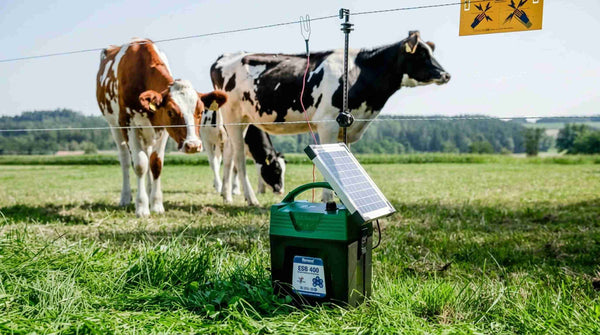
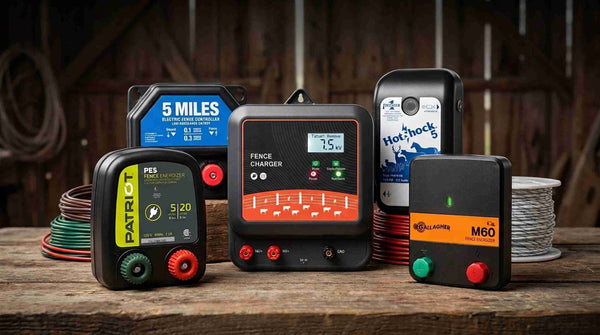
The fence energizer is the heart of your system. Many farmers choose a unit that's too weak. According to USDA ARS (2020), effective fences require 2,000V minimum for cattle and 3,500–4,500V for sheep/goats due to wool insulation. The key metric is output joules — always oversize by 30%.
 VetraPulse solar energizer — ideal for remote pastures and rotational grazing setups.
| Animal | Min. Voltage at Wire | Recommended Output | Notes |
|---|---|---|---|
| 🐄 Cattle | 2,000 V | 2–5 Joules / mile | Wet nose increases conductivity |
| 🐑 Sheep/Goats | 3,500–4,500 V | 3–6 Joules / mile | Wool insulates; higher voltage required |
| 🐔 Poultry netting | 2,000–3,000 V | 0.5–2 Joules | Deters predators |
| 🦊 Predator Control | 4,000–6,000 V | 5–10 Joules | Coyotes, foxes need high output |
Insufficient Grounding — The Silent Fence Killer
 Three galvanized ground rods (min 4ft depth, 3ft spacing) — crucial for performance.
Poor grounding is responsible for >80% of cases where energizer tests fine but fence fails. The circuit cannot complete without adequate ground rods. Standard: 3 rods, 4ft long, spaced 3ft apart. In dry/sandy soil use 6+ rods.
- Standard soil: Minimum 3 rods, 4 ft each
- Dry / sandy: 6+ rods, extend depth
- Rocky / frozen: Buried copper wire ground mats
- Never aluminum — only galvanized steel or copper
Choosing the Wrong Fence Type for Your Livestock
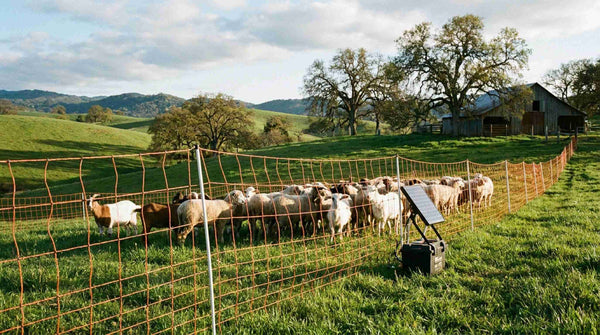
 VetraPulse 48" electric poultry netting — predator-proof containment.
🐓 Why Electric Netting Is Different
Electric netting creates a physical and psychological barrier. Perfect for poultry, sheep, goats, and predator exclusion. Cornell Cooperative Extension (2019) confirms netting reduces fox/raccoon predation by 90–98%.
| Type | Best For | Portability | Predator Control |
|---|---|---|---|
| Polywire | Cattle, horses, rotation | High | Low |
| Electric Tape | Horses (visibility) | Medium | Low |
| Electric Netting | Poultry, sheep, goats, rabbits | High | Excellent |
Letting Vegetation Touch the Fence Wire
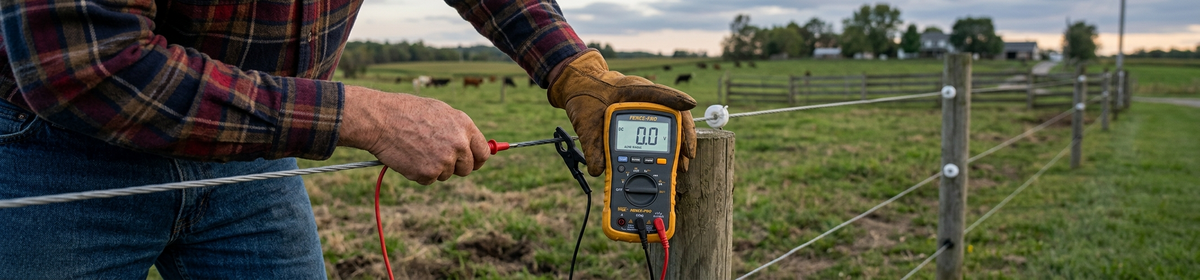
 Clean 6" vegetation-free strip under wire maintains 92–97% output voltage.
Grass/weeds touching wires drain voltage continuously. Research from UNL Extension (2020) shows a single plant contact drains 200–400V, and heavily vegetated fences lose 68% of effective voltage.
- Keep a 6-inch clear strip beneath wires
- Mow or spray 3–4 times per grazing season
- Use a digital fence voltmeter monthly
- Inspect electric netting weekly for grass contact
Wrong Wire Count and Incorrect Wire Heights
Many farmers underestimate strands and heights. Goats, sheep, and calves require dense strand spacing to prevent pushing under/jumping. Below is the quick guide:
| Animal | Strands | Wire Heights from Ground |
|---|---|---|
| 🐄 Adult Cattle | 2–3 wires | 22", 40" (plus 52") |
| 🐑 Sheep | 5 wires | 6",12",18",24",36" |
| 🐐 Goats | 5–6 wires | 6",12",20",28",36",44" |
| 🐔 Poultry | Netting 42–48" tall | Full-height flush to ground |
Build a Fence That Actually Works 🌿
VetraPulse offers professional electric fence systems — engineered for real farm conditions.
Electric Fencing Systems
Polywire, polytape, posts, insulators. Perfect for cattle, horses & rotational grazing.
Shop Electric Fencing🐔Electric Netting
Portable, predator-proof netting for poultry, sheep, goats & rabbits. Maximum protection.
Shop Electric Netting☀️Fence Energizers
Solar, AC, battery-powered energizers. From 0.3J compact to 5J high-output units.
Shop EnergizersstReal-World Evidence
3 Case Studies: What Went Wrong — and How It Was Fixed
A 0.5J energizer and single ground rod caused escapes. Upgraded to 3J energizer, five 6ft ground rods, cleared vegetation. Mid-fence voltage rose to 3,400V, escapes dropped to zero.
4-strand wire fence allowed fox predation (8–12 birds/week). Switched to 48" electric netting + 1.5J energizer. Predation dropped to zero in first week.
Wrong strand spacing (12" lowest wire) allowed goats to push under. Upgraded to 5 strands at 6",12",20",28",38" + 2J energizer. Full containment achieved.
Got Questions?
Frequently Asked Questions
Expert answers from extension research and VetraPulse team.
Conclusion
Fix the Fundamentals. Build a Fence That Lasts.
Right-size your energizer. Drive proper ground rods. Choose correct fence type. Manage vegetation. Install correct strand heights. Do these five things, and your electric fence will deliver reliable, cost-effective containment.
At VetraPulse, we carry professional electric fence systems – from portable netting to high-output solar energizers. Build your system right — the first time.
University of Wisconsin Extension, 2021 · USDA ARS, 2020 · Penn State Extension, 2019 · Purdue Extension, 2018 · UNL Extension, 2020 · Cornell Cooperative Extension, 2019 · Texas A&M AgriLife, 2020