How Painful Is an Electric Fence
for Animals?
The complete science, species comparison & humane use handbook — research-backed voltage guidelines for every livestock owner, farmer, and rancher.
📋 Table of Contents
If you have ever accidentally grazed an electric fence wire, you know that jolt — sharp, startling, and instantly unforgettable. But what about the animals on the other side of those wires? Do cattle feel the same thing as a horse? Is it genuinely painful, or primarily a startle reflex? And most fundamentally — is using an electric fence to manage animals actually humane?
These questions matter deeply for every responsible farmer, rancher, and animal keeper. In this comprehensive guide, we break down the precise science behind electric fence pain, analyze how each livestock species responds to electrical pulses, and provide expert-backed guidelines to ensure your fencing is both maximally effective and minimally uncomfortable for your animals.
1. What Is an Electric Fence & How Does It Work?

An electric fence is a behavioral conditioning barrier that delivers brief, high-voltage electrical pulses to create a powerful deterrent response in animals. Unlike physical barriers — wooden rails, chain link, barbed wire — that rely on structural strength, electric fences operate through conditioned avoidance: animals learn rapidly to associate the fence line with an unpleasant sensation and naturally avoid it thereafter.
The Four Components of Every Electric Fence System
-
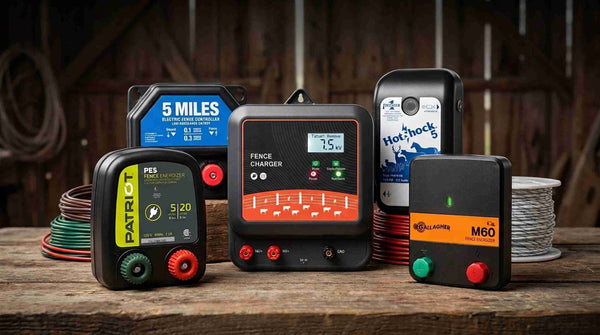
The Energizer (Fence Charger) Converts mains, solar, or battery power into precise high-voltage pulses — typically 3,000–10,000 volts — released at approximately one-second intervals throughout the day.
-
The Fence Wire, Tape, or Netting Conducts the electrical charge across the entire perimeter. Available in solid wire, polywire, high-visibility braid, or netting — each suited to different species and terrain types.
-
The Animal Contact Point When an animal touches the charged wire, its body becomes part of the electrical circuit, momentarily allowing current to flow from wire through body to ground.
-
The Ground Rod System Steel rods driven into the earth close the circuit back to the energizer. Grounding quality is the single biggest factor in fence performance — and the most commonly neglected one.
Source: American Society of Agricultural and Biological Engineers, ASABE Standard S525
2. The Physics of Pain: Volts, Amps & Joules Explained

Understanding why properly designed electric fences deter without injuring requires clarity on three fundamental electrical measurements. Getting these right is the difference between humane deterrence and potential harm to your animals.
⚡ Voltage (Volts) — The "Pressure"
Voltage is the electrical pressure that forces current through a conductor. High voltage — 5,000 to 10,000V — is required to push electricity through the high-resistance barrier of animal skin, wool, or feathers. Voltage alone does not determine pain level or danger.
Think of it like water pressure: high pressure forces water through a narrow pipe, but the pressure itself doesn't determine damage — the flow rate does.
⚡ Amperage (Amps) — The "Flow"
Amperage is the actual electrical current flowing through the body — the measurement that determines physiological risk. In humans, sustained exposure to as little as 100 milliamps (0.1 amps) can cause cardiac arrest. Well-engineered livestock energizers deliberately limit peak current to 60–120 milliamps — startling and memorable, but far too brief to disrupt cardiac function.
Source: International Electrotechnical Commission IEC 60335-2-76 — Safety Standard for Electric Fence Energizers⚡ Joules (Stored Energy) — The Critical Safety Metric
The joule rating is the single most important specification when selecting an energizer. It measures the total energy released in each pulse — the true determinant of shock force delivered to an animal. Always compare energizers on output joules (what reaches the fence wire), not stored joules.
| Output Energy Level | Effect on Animals | Typical Application |
|---|---|---|
| 0.1 – 0.3 Joules | Very mild startle; barely perceptible to large animals | Poultry netting, small pets |
| 0.3 – 0.7 Joules | Moderate startle; effective deterrent for sensitive species | Horses, dogs, small livestock |
| 0.7 – 2.0 Joules | Strong deterrent; effective for most farm livestock | Cattle, sheep, goats |
| 2.0 – 5.0 Joules | High-power; dense vegetation or long perimeters | Large ranches, wildlife exclusion |
| > 5.0 Joules | Excessive for most livestock; potential distress risk | Bear exclusion in high-risk areas only |
3. Pain Scale by Species: How Different Animals Experience Electric Shock

No two species respond identically to electrical stimulation. Skin resistance, coat thickness, body mass, behavioral temperament, and neural sensitivity all interact to determine how intensely an animal feels an electric fence shock — and how quickly it learns to avoid the fence entirely.
📊 Complete Species Voltage & Response Comparison
| Animal | Skin Resistance | Min. Effective Voltage | Recommended Output | Typical Reaction | Conditioning Speed |
|---|---|---|---|---|---|
| 🐄 Cattle | Medium (moist nose) | 2,000 V | 0.5 – 2.0 J | Moderate — sharp withdrawal | Fast: 1–3 contacts |
| 🐴 Horses | Low (very sensitive) | 1,500 V | 0.3 – 1.5 J | Strong — potential panic, bolting | Very Fast: 1–2 contacts |
| 🐑 Sheep (wooled) | Very High (insulating fleece) | 5,000 V | 1.5 – 3.0 J | Mild — needs high voltage | Moderate: 3–7 contacts |
| 🐐 Goats | Medium | 3,000 V | 0.5 – 2.0 J | Moderate — curious, persistent | Fast: 2–4 contacts |
| 🐕 Dogs | Low–Medium | 1,500 V | 0.1 – 0.4 J | Strong — distinct startle response | Fast: 2–4 contacts |
| 🐓 Chickens & Poultry | Low | 1,000 V | 0.1 – 0.3 J | Moderate — swift retreat | Moderate: 2–5 contacts |
| 🦌 Deer | Medium | 3,000 V | 0.5 – 1.5 J | Very Strong — instant flight response | Very Fast: 1–2 contacts |
| 🐻 Bears | Very High (dense coat) | 6,000 V | 2.0 – 5.0 J | Strong — deterred after contact | Fast: 1–3 contacts |
🐄 Cattle — Efficient, Fast-Learning Animals
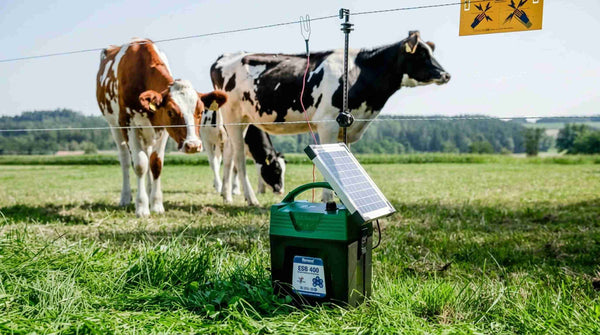
Cattle have medium skin resistance, with particularly conductive contact at their moist nose and mouth area. A properly calibrated electric fence delivers a sensation comparable — by animal welfare researchers — to a sharp static electricity shock. Critically, cattle are among the fastest-learning livestock species, typically requiring only 1–3 fence contacts before fully respecting the boundary.
Research from the University of Queensland's School of Animal Science found that cattle exposed to standard electric fence pulses (1.5 joules, 4,500V) showed no measurable cortisol elevation within 30 minutes of exposure — indicating no significant lasting stress response from properly calibrated systems.
Source: University of Queensland, Animal Behaviour & Welfare Studies, 2018🐴 Horses — Handle With Extra Sensitivity
Horses are among the most electrically sensitive of all farm animals. Their thin, often moist skin offers low resistance, and their naturally reactive temperament means even a moderate shock can trigger panic — rearing, bolting, or attempting to jump. For equine applications, always use wide, high-visibility electric tape or braid (not bare wire), set output no higher than 1.5 joules, and complete a supervised 5–7 day conditioning period.
Source: American Association of Equine Practitioners (AAEP), Fencing Safety Recommendations🐑 Sheep — The Wool Insulation Challenge
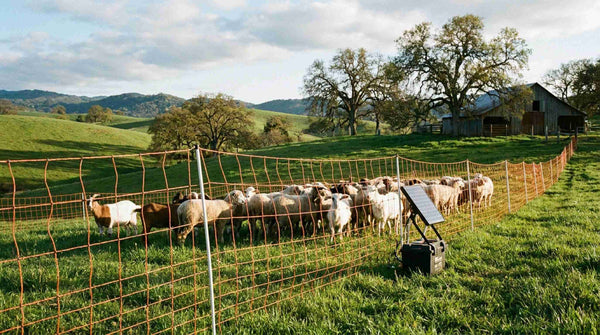
Sheep present a unique engineering challenge: their wool is an outstanding electrical insulator, meaning the same voltage that immediately deters a horse may produce barely a tingle through 5 cm of Merino fleece. Sheep-appropriate systems therefore require significantly higher voltage (5,000–8,000V) and output energy (1.5–3.0 joules). Freshly shorn sheep have dramatically reduced skin resistance — always reduce energizer output by 30% after shearing to maintain humane shock levels. Electric netting is particularly effective for sheep.
🐓 Chickens & Poultry — Electric Netting is the Gold Standard
With relatively thin, unprotected skin and small body mass, chickens respond effectively to low-voltage systems. Electric netting at 2,000–3,000V with 0.1–0.3 joule output is sufficient to deter both birds from escaping and predators (foxes, raccoons, weasels) from entering. Research published by the Poultry Science Association found no adverse welfare effects on flocks managed within correctly calibrated electric netting systems.
Source: Poultry Science Association, Predator Management & Fencing Welfare Report, 20194. Are Electric Fences Humane? What Research Actually Says

This is the central ethical question. The direct, evidence-based answer: Yes — properly calibrated electric fences are considered humane by mainstream animal welfare science and regulatory bodies across the world. The critical qualifier, as always, is "properly calibrated."
What Leading Organizations Conclude
The Royal Society for the Prevention of Cruelty to Animals (RSPCA) in the UK explicitly recognizes electric fencing as an acceptable livestock management tool when used within established guidelines. The RSPCA distinguishes the brief, pulsed nature of modern energizers from the more harmful sustained electrical exposure.
The American Veterinary Medical Association (AVMA) confirms that short-pulse, low-energy electric fence systems do not cause tissue damage, internal injuries, or lasting physiological stress under normal operating conditions in healthy animals.
A landmark study by the University of Bristol's Animal Welfare Science Group (2014) compared cortisol levels in cattle managed within electric paddocks versus conventional fenced areas. Result: no statistically significant difference in baseline or peak cortisol between the groups, demonstrating that electric fencing does not impose chronic stress once animals are properly conditioned.
Source: University of Bristol, Applied Animal Behaviour Science, Vol. 152, 2014⚠️ When Electric Fences Become Problematic
Electric fencing causes unnecessary distress or harm under these conditions:
- Output joules set too high for the animal species involved
- Animals cannot escape a repeated shock source (confined against a corner or water body)
- Young, sick, or injured animals exposed without supervision
- Broken wires create uncontrolled arcing or prolonged contact
- Voltage not tested regularly — allowing fence power to drop below deterrent levels
- Wet conditions not accounted for (water reduces skin resistance significantly)
5. Real-World Cases & Expert Insight

450-Head Dairy Farm Transition to Electric Fencing
A commercial dairy operation replaced 6-strand barbed wire with a 5-wire electric system using 2.0-joule energizers across an 18-acre rotational grazing system. Cattle were conditioned over a 5-day supervised period before full deployment.
Reduction in fence-crossing attempts within 3 weeks. Zero animal injuries recorded during the 12-month study period. Annual fence maintenance costs fell by 60%.
Source: USDA Agricultural Research Service, Rotational Grazing Fencing Transition Report, 2021
8,000-Head Merino Sheep Station
An extensive sheep operation replaced traditional fixed fencing with electric netting across 12 kilometers of boundary. Initial testing confirmed that 6,500V output was required to penetrate through thick Merino wool effectively.
Full conditioning achieved in under one week. Post-transition veterinary checks confirmed no skin damage or abnormal behaviors. Predator-related losses fell by 87% in year one.
Source: Australian Wool Innovation Ltd., Electric Fencing Efficiency & Welfare Report, 2020
Backyard Flock — Nightly Fox Predation Resolved
A small-scale poultry keeper deployed electric netting at 2,500V to protect 40 hens from persistent nightly fox predation. The keeper had lost 8 birds in the two weeks before installation.
Zero predator incidents in the 6 months following installation. Flock maintained normal laying rates with no observable behavioral changes.
Source: Oregon State University Extension, Poultry Management Community Forum, 2022
"The brief, conditioned discomfort of a properly calibrated electric fence shock is unequivocally less harmful than the injuries, deaths, and chronic stress that result from animals escaping inadequate containment, encountering predators, or suffering the lacerations of barbed wire."
6. Electric Fence vs. Traditional Fencing Options

When evaluating fencing options from animal welfare and practical effectiveness standpoints, electric fencing consistently outperforms traditional alternatives for most livestock and wildlife management applications.
| Feature | ⚡ Electric Fence | 🔗 Barbed Wire | 🪵 Wooden Rail | 🔒 Chain Link |
|---|---|---|---|---|
| Physical Injury Risk | ✅ Very Low (brief shock only) | ❌ High (lacerations, entanglement) | ✅ Low | ⚠️ Medium (edge cuts) |
| Psychological Deterrence | ✅ Very High | ⚠️ Moderate | ❌ Low | ⚠️ Moderate |
| Cost per 100m Installed | $ Low–Medium | $ Low | $$$ Very High | $$ Medium–High |
| Ongoing Maintenance | ✅ Low | ⚠️ Medium | ❌ High | ⚠️ Medium |
| Predator Exclusion | ✅ Excellent | ⚠️ Moderate | ❌ Poor | ✅ Good |
| Wildlife Safe | ✅ Yes (if calibrated) | ❌ No (entanglement deaths) | ✅ Yes | ⚠️ Partial |
| Relocatable | ✅ Yes (netting systems) | ❌ No | ❌ No | ❌ No |
| Animal Welfare Rating ⭐ | ⭐⭐⭐⭐⭐ | ⭐⭐ | ⭐⭐⭐⭐ | ⭐⭐⭐ |
Source: USDA NASS Agricultural Statistics, 2022
7. How to Use Electric Fences Safely & Humanely

The difference between a humane, highly effective electric fence and a problematic one comes down entirely to setup, calibration, and ongoing maintenance. Follow these seven critical steps for every installation:
-
Select the Right Energizer for Species & Acreage Match output joules to both animal type and total fence length. Allow approximately 0.1 joules of output per kilometer of clear fence, or 0.3 joules/km where vegetation contact is expected. Browse our complete energizer range to find the right match for your operation.
-
Verify Voltage with a Digital Fence Tester After installation, confirm output at multiple fence-line points — particularly at the far end from your energizer. Target 3,000–5,000V for cattle, 2,000–4,000V for horses, and 5,000–8,000V for wooled sheep. Any point reading below 2,000V warrants immediate troubleshooting.
-
Install a Proper Multi-Rod Grounding System Poor grounding is the #1 cause of electric fence underperformance. Install a minimum of 3 galvanized steel ground rods, each 1.8m (6ft) long, spaced 3m (10ft) apart in consistently moist soil. Connect with ground wire and test ground system resistance.
-
Condition Animals Before Full Deployment Set up a small, supervised training paddock where animals can safely encounter the fence under observation. This conditioning period typically takes 3–7 days and dramatically reduces fence-testing behavior thereafter. Never skip this step.
-
Maintain Vegetation Clearance Actively Grass, weeds, or brush contacting the fence wire creates "ground faults" that drain power progressively. Maintain a clear 30cm (12 inch) zone below the wire at all times — especially critical during spring and summer growing seasons.
-
Inspect Weekly and After Every Major Weather Event Check for broken wires, damaged insulators, loose connections, and voltage drops after storms, heavy rain, or freeze-thaw cycles. A fence that appears visually intact but reads below effective voltage provides no reliable deterrence.
-
Choose the Right Fence Format for Your Application Rotational grazing: multi-strand electric wire. Small livestock and poultry protection: electric netting. Horses: wide, high-visibility electric tape. Perimeter security: permanent multi-strand wire from our electric fencing collection.
⚡ Ready to Build Your Fence?
Shop our professionally curated range — designed for every animal, every terrain, and every scale of operation.
❓ Frequently Asked Questions
Can an electric fence kill an animal?
Under normal operating conditions with a properly calibrated commercial livestock energizer, no. Modern electric fence systems are engineered to deliver pulses of only 1/300th of a second — far too brief to cause cardiac arrest in a healthy adult animal. Peak current (60–120 milliamps) remains below lethal thresholds for cattle, horses, sheep, and most other farm species.
Elevated risk does exist for animals in water (which dramatically reduces skin resistance), very young or neonatal animals, animals with pre-existing cardiac conditions, or situations where an animal becomes entangled and cannot escape repeated contact. Always assess your specific environment and eliminate these risk factors before deployment.
Source: International Electrotechnical Commission, Standard IEC 60335-2-76
What is the safest voltage for electric fences used around horses?
Horses should be managed with fence line voltage of 2,000–4,000 volts and energizer output no higher than 0.5–1.5 joules. Horses are among the most electrically sensitive farm animals due to their thin, often moist skin and reactive temperament. Always use wide, high-visibility electric tape or braid for equine applications — never bare wire — providing a clear visual boundary that allows horses to see and avoid the fence before inadvertent contact.
Allow a supervised 5–7 day conditioning period in a safe training paddock before full deployment across the entire perimeter.
Source: American Association of Equine Practitioners (AAEP), Equine Fencing Safety Guidelines
Does wet weather make electric fence shocks more painful for animals?
Yes, significantly. Water reduces the electrical resistance of both skin and soil, meaning the same voltage delivers more current through an animal's body during and after rainfall. Experienced livestock managers routinely reduce energizer output by 20–30% during prolonged wet periods to maintain humane shock levels while preserving deterrent effectiveness.
This is especially important for horses and recently shorn sheep, who already have lower baseline skin resistance. Use a digital fence tester to regularly verify output during changing weather conditions.
Are electric fences safe for wildlife — deer, foxes, bears, and raccoons?
Yes, when calibrated appropriately for the target species. Wildlife management agencies including the US Fish & Wildlife Service and state game departments routinely recommend electric fencing for wildlife deterrence — including bear exclusion around beehives, orchards, and chicken coops — using 5,000–8,000V and 2.0–5.0 joule systems for large ursids.
Deer are highly sensitive and typically learn after just 1–2 contacts. Foxes and raccoons are effectively deterred by standard poultry netting settings. No lasting physical harm to wildlife from correctly calibrated systems has been documented in peer-reviewed wildlife management literature.
Source: US Fish & Wildlife Service, Human-Wildlife Conflict Prevention Guidelines, 2023
How many times does an animal need to be shocked before it respects the fence?
Conditioning speed varies meaningfully by species. As general benchmarks: horses and deer learn after just 1–2 contacts due to their strong flight instinct. Cattle typically condition within 1–3 contacts. Dogs, chickens, and goats usually develop fence respect within 2–4 contacts. Wooled sheep may require 3–7 contacts due to fleece insulation reducing shock intensity on initial encounters.
Importantly, the psychological deterrence from initial conditioning is long-lasting — most livestock maintain fence respect for weeks or months even if the energizer is briefly disconnected, making electric fencing a highly efficient long-term behavioral management tool.
Is electric netting different from standard wire fencing in terms of animal pain?
Electric netting delivers pulses at the same voltage and energy levels as wire systems of equivalent energizer settings, so the fundamental shock experience is comparable. However, netting's geometric pattern means animals encounter horizontal strands at multiple heights simultaneously, which can increase contact likelihood and therefore accelerate conditioning.
For poultry, netting's low profile (typically 65–122cm high) with distributed vertical conductors provides dramatically superior predator exclusion compared to single-strand wire, while the accessible entry/exit design makes relocation fast and practical for rotational systems.
Can electric fencing be used safely with dogs?
Electric containment fencing can be used with dogs, but requires particularly careful setup due to their sensitivity and variable temperaments. Use the lowest effective output (0.1–0.3 joules) and always incorporate a clear visual boundary marker (flags or stakes) and ideally an auditory or vibration warning cue before the shock zone, allowing dogs to learn the boundary without panic-inducing full shocks.
Electric fencing is not recommended for highly anxious or reactive breeds, dogs with cardiac conditions, or puppies under 6 months without direct veterinary guidance. Always consult an experienced certified dog trainer before implementing electric containment systems.
Source: American Veterinary Medical Association (AVMA), Position Statement on Electric Fence Containment Systems for Companion Animals
How do I accurately measure the voltage running along my fence line?
The only reliable method is using a digital fence voltmeter (also called a digital fence tester). Analog testers with simple indicator lights or LED bars are not accurate enough for species-specific calibration. Test voltage at a minimum of three points: directly at the energizer output, at the midpoint of your fence line, and at the far end from the energizer — the most common location for voltage drop.
Target readings: 3,000–5,000V for cattle; 2,000–4,000V for horses; 5,000–8,000V for wooled sheep; 2,000–3,000V for poultry and dogs. Any point reading below 2,000V should trigger immediate fault-finding — check for vegetation contact, poor ground connections, broken wire, or damaged insulators.
What is the difference between stored energy and output energy in an energizer?
Stored energy (stored joules) is the total energy charged in the energizer's capacitor before each discharge. Output energy (output joules) is what actually travels through the fence wire after accounting for resistance losses in transformers, switches, and connections. Output energy is always lower than stored energy — typically by 30–50%.
When comparing energizers, always use output joule ratings as your benchmark — not stored energy. An energizer marketed as "10J stored" may only deliver 5J output at the fence line. Reputable manufacturers clearly state both figures. If only stored energy is listed, treat the actual output estimate with caution.
Source: International Electrotechnical Commission, Standard IEC 60335-2-76
Are there effective humane alternatives to electric fencing for predator exclusion?
Several alternatives exist, each with meaningful limitations. Guardian animals — livestock protection dogs, donkeys, llamas — provide effective deterrence for sheep and goats but require significant care, training time, and ongoing expense. Woven wire physical fencing offers containment but weak predator exclusion and high per-meter installation costs. Scent repellents and visual deterrents have limited effectiveness against determined predators.
Research from North Carolina State University Extension (2023) found that electric fencing delivered the highest predator exclusion success rate (94–99%) compared to all non-lethal alternatives, while maintaining comparable or superior animal welfare outcomes relative to conventional fixed fencing. For most livestock operations, electric fencing offers the best combination of effectiveness, cost, and humane performance.
Source: NC State Extension, Integrated Non-Lethal Predator Management in Livestock Production Systems, 2023
🌿 Conclusion: Science, Safety & Humane Best Practice
Electric fences, when properly designed, calibrated, and maintained, represent one of the most effective, economical, and genuinely humane options available for livestock containment and predator exclusion. The science is unambiguous: ultra-short pulse duration (1/300th of a second), low peak amperage (60–120 milliamps), and species-appropriate energy output create a powerful psychological deterrent with minimal physical discomfort and zero lasting physiological harm in healthy animals.
The real-world alternative — inadequate containment leading to escapes, road accidents, predator attacks, and the daily entanglement injuries of barbed wire — carries a far greater animal welfare cost than any properly administered electric fence pulse. Every piece of research reviewed for this guide reaches the same conclusion: calibrate correctly, condition animals properly, maintain your system consistently, and electric fencing delivers outstanding results for animals and owners alike.
Use the species-specific voltage and joule guidelines in this article, invest in quality equipment, and take the time to condition your animals through a supervised introduction period. The result is livestock that are safer, healthier, and less stressed — and a fencing system that works reliably season after season with minimal upkeep.