Everything You Need to Know About
Setting Up an Electric Fence
From scratch to fully operational: choosing components → installation steps → grounding best practices → routine maintenance — one guide to save you years of costly trial and error.
Visit VetraPulse →
📋 Table of Contents
- What Is an Electric Fence? How It Works in Plain English
- The Six Core Components of an Electric Fence System
- Choosing the Right Fence for Your Livestock
- Step-by-Step Installation Guide for Beginners
- Grounding: The Most Overlooked Factor in Any Electric Fence
- Permanent vs. Temporary Electric Fencing: A Full Comparison
- Real-World Case Studies: Lessons from Three Livestock Owners
- Routine Maintenance and Troubleshooting
- Frequently Asked Questions (12 Q&As)
- Beginner's Purchasing Checklist
1What Is an Electric Fence? How It Works in Plain English
An electric fence is a containment system that uses low-energy, high-voltage pulses to deter animals — or people — from crossing a boundary. Unlike conventional wire or post-and-rail fencing, which relies entirely on physical barriers, an electric fence works by delivering a brief, unpleasant shock that conditions livestock to respect the boundary. In short, it builds a psychological barrier rather than a purely structural one.
A properly functioning electric fence delivers approximately one pulse per second. Each pulse lasts only around 0.0003 seconds — a fraction of a blink. This means that even accidental contact will not cause lasting harm. The engineering principle behind every modern energizer is controlled deterrence, not injury.

2The Six Core Components of an Electric Fence System
Many first-time buyers assume that a roll of wire and a basic power unit are all they need. In reality, a fully functional electric fence system consists of six distinct components — and every single one matters.
Energizer
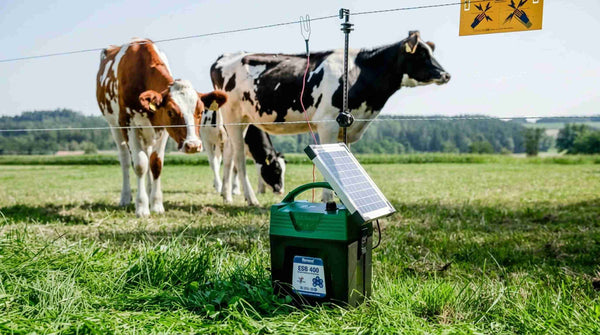
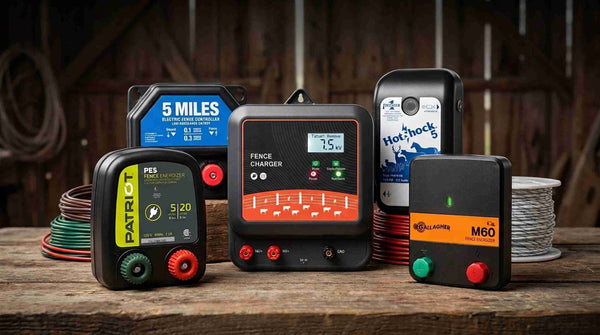
The heart of the system. Converts mains power, solar energy, or a battery into precisely timed high-voltage pulses.
Ground Rod(s)
Metal stakes driven deep into moist soil to complete the electrical circuit. The single most neglected component by beginners.
Fence Wire / Conductor
Carries the high-voltage pulse around the perimeter. Available as bare wire, coated wire, polywire, or polytape.
Insulators
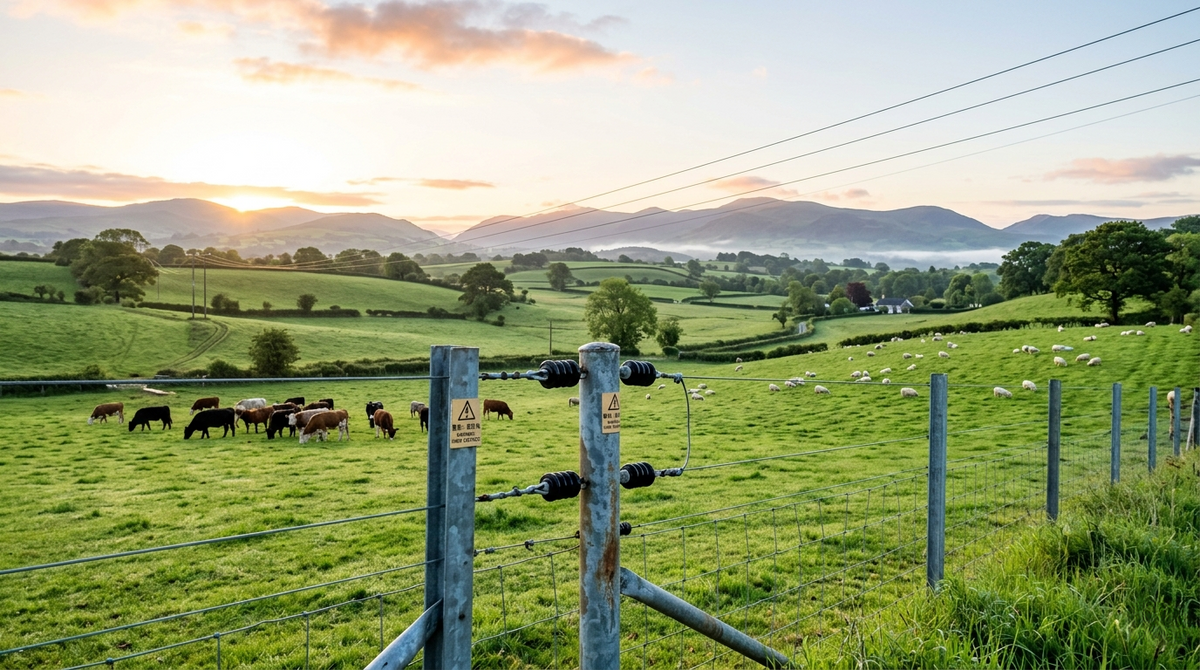
Mounted on fence posts to keep the live conductor isolated from the post, preventing energy loss to the ground.
Fence Posts
Structural supports for the conductor. Options include wooden posts, steel T-posts, and fibreglass step-in stakes.
Gate Handles
Insulated, spring-loaded handles attached to a short conductor that allow you to open and close a section of live fence safely.

3Choosing the Right Fence for Your Livestock
Different species demand very different fence specifications. Cattle are large, have good ground contact, and are relatively straightforward to contain. Sheep and goats have thick fleeces that insulate them from the wire, requiring higher voltage and more strands. Pigs have highly sensitive snouts and can be stopped with a single low strand. Poultry require multiple closely spaced strands combined with netting. Getting these specifications right from the outset is critical.
Recommended Electric Fence Specifications by Animal
| Livestock Type | No. of Strands | Lowest Strand Height | Highest Strand Height | Target Voltage (kV) | Energizer Output |
|---|---|---|---|---|---|
| 🐄 Beef / Dairy Cattle | 2–3 strands | 50 cm (20 in) | 90 cm (35 in) | 4–7 kV | 1–5 joules |
| 🐑 Sheep | 3–5 strands | 20 cm (8 in) | 90 cm (35 in) | 5–8 kV | 2–5 joules |
| 🐐 Goats | 4–6 strands | 20 cm (8 in) | 100 cm (39 in) | 5–9 kV | 2–6 joules |
| 🐖 Pigs / Hogs | 1–2 strands | 20 cm (8 in) | 50 cm (20 in) | 3–5 kV | 0.5–2 joules |
| 🐴 Horses / Ponies | 2–4 strands | 60 cm (24 in) | 120 cm (47 in) | 4–6 kV | 2–5 joules |
| 🐓 Poultry | 5–7 strands + netting | 10 cm (4 in) | 60 cm (24 in) | 4–6 kV | 1–3 joules |
| 🦁 Predator Exclusion | 3–5 strands + outrigger | 30 cm (12 in) | 120 cm (47 in) | 7–10 kV | 5–10 joules |
Energizer Power Source — Which One Is Right for You?
| Power Source | Best For | Advantages | Disadvantages | Relative Cost |
|---|---|---|---|---|
| Mains / AC Power | Fixed pastures with grid access | Consistent output; highest power capacity | Requires wiring; fixed installation point | Moderate |
| Solar | Remote paddocks; off-grid properties | No ongoing electricity cost; environmentally friendly | Performance reduced during extended overcast periods | Higher upfront |
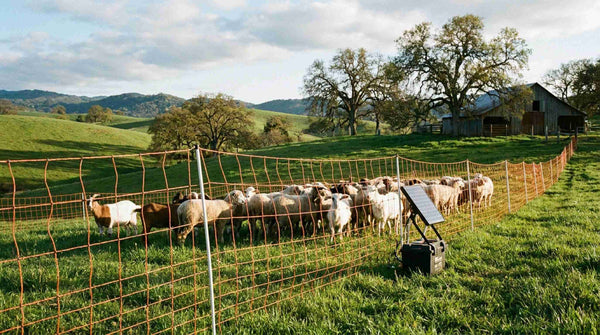
| 12V Battery | Temporary fencing; rotational grazing | Fully portable; no infrastructure needed | Requires regular recharging or battery replacement | Low |
| Solar + Battery Combination | Remote permanent fencing | Most reliable off-grid option | Highest initial investment | High |
4Step-by-Step Installation Guide for Beginners
Installing an electric fence is well within the reach of a first-timer — but sequence and attention to detail matter enormously. Follow this seven-step process to get it right the first time.
Plan Your Fence Line and Measure the Perimeter
Walk the intended fence line with a tape measure or use a GPS device to record the total perimeter. Sketch a simple layout plan and flag problem areas — slopes, rocky ground, and low-lying wet zones all require extra attention. Calculate total wire needed as: perimeter length × number of strands, then add 10% for wastage and connections.
Drive Your Corner and End Posts
Corner posts and end posts anchor the entire tension of your fence line and must be set solidly. Drive them to a minimum depth of 90 cm (36 inches) and brace each one with a diagonal brace wire to prevent inward pull. These posts bear the greatest mechanical load in the system — skimping here undermines everything else.
Install Intermediate Line Posts
Space intermediate posts every 10–15 metres on flat ground, and every 5–8 metres on slopes or curves. Steel T-posts work well on open flat terrain; fibreglass step-in posts are better suited for curved runs. Drive intermediate posts to a depth of 45–60 cm (18–24 inches).
Attach Insulators to Every Post
Clip or screw an insulator at each strand height on every post. Inspect each insulator for cracks or UV degradation before installing — any damage creates a current leak path. As a rule of thumb, replace insulators exposed to direct sunlight every two years, as UV degrades the plastic over time.
Run and Tension the Wire
Unroll the conductor from one end post, thread it through each insulator along the run, and return it to the starting end. Secure all connections with purpose-made crimp sleeves or wound joints — never rely on loose twists alone. Use an in-line strainer to set appropriate tension: the wire should be taut but not so tight that thermal expansion in summer risks snapping it.
Install the Grounding System
This is the most critical step in the entire installation (see the dedicated section below). Ground rods must be driven into consistently moist soil. Use a minimum of three rods, spaced at least 3 metres apart, and connect them in series with a continuous ground wire before running back to the energizer's earth terminal.
Mount the Energizer and Test the System
Mount the energizer in a dry, well-ventilated location at least 1 metre above the ground. Connect the fence terminal and the earth terminal. Once powered on, walk the entire fence line with a digital fence voltmeter, checking voltage at regular intervals and especially at the far end of the run — the most distant point should read no less than 3 kV.

5Grounding: The Most Overlooked Factor in Any Electric Fence
There is a widely cited rule in the electric fencing industry: "Eighty percent of all fence failures are grounding failures." The earth system is the single most decisive factor in whether your fence delivers a reliable deterrent — and it is consistently the element that first-time installers underestimate or ignore entirely.
Understanding How Grounding Works
When an animal makes contact with a live strand, current must travel a complete circuit to deliver a shock. That path is:
Energizer → Fence wire → Animal's body → Soil → Ground rod(s) → Back to energizer
Break any link in that chain and the animal feels nothing. Dry, sandy, or rocky soil is a poor conductor; in these conditions you need more ground rods, driven deeper, in the most moisture-retentive location available.
Standard Grounding Specifications
| Parameter | Minimum Standard | Recommended Standard | Notes |
|---|---|---|---|
| Number of Ground Rods | 1 rod | 3 or more | Allow one rod per joule of energizer output |
| Rod Length | 90 cm (3 ft) | 120–180 cm (4–6 ft) | Longer is always better; must reach moist soil |
| Rod Spacing | 2 m (6.5 ft) apart | 3 m (10 ft) or more | Prevents overlapping earth zones |
| Ground Wire Gauge | 12 AWG bare copper | 10 AWG insulated copper | Do not substitute aluminium wire |
| Rod Material | Galvanised steel | Copper or stainless steel | Avoid mixing copper wire with galvanised rods (galvanic corrosion) |
| Soil Moisture | Damp | Consistently moist year-round | In arid climates, water the ground bed periodically or relocate rods to naturally wet areas |

6Permanent vs. Temporary Electric Fencing: A Full Comparison
Electric fencing broadly divides into two categories: permanent installations designed to last a decade or more, and portable systems intended for rotational grazing or short-term use. Before purchasing anything, be clear about your primary use case — the right choice here will save you significant time and money.
| Comparison Factor | 🏗️ Permanent Electric Fence | 🚐 Temporary / Portable Electric Fence |
|---|---|---|
| Typical Use Case | Fixed property boundaries, permanent paddocks | Rotational grazing, strip grazing, temporary exclusion zones |
| Installation Complexity | Higher — requires post-driving equipment and tensioning tools | Straightforward — one person can set it up quickly |
| Installation Time | 1–3 days per 100 metres of fencing | 30 minutes to 2 hours |
| Upfront Cost | Higher (posts, high-tensile wire, bracing hardware) | Lower (electric netting or step-in posts with polywire) |
| Service Life | 10–20+ years with proper maintenance | 3–7 years (dependent on usage and handling) |
| Flexibility | Fixed — cannot be relocated once installed | High — reconfigure the layout at any time |
| Wind Resistance | Excellent — stays in place in high winds | Vulnerable — portable systems can be blown down in strong gusts |
| Maintenance Frequency | 1–2 thorough inspections per year | Check before each deployment |
| Beginner-Friendly | Learning curve involved | Ideal starting point for first-timers |
| Typical Product Examples | High-tensile steel wire + treated wooden posts | Electric netting / fibreglass step-in post systems |
7Real-World Case Studies: Lessons from Three Livestock Owners
Key Lesson: Insufficient ground rod depth and count is the leading cause of electric fence failure in dry or hilly terrain. Ground rods must be installed in areas that retain moisture year-round — typically low-lying ground or north-facing slopes. As a baseline, budget at least one ground rod for every joule of energizer output.
Key Lesson: Vegetation contact — particularly wet or green grass — bleeds energy from the conductor, causing voltage to drop sharply. Clearing a 30 cm (12-inch) buffer on both sides of the wire is essential ongoing maintenance, not a one-off task. For fence runs exceeding 5 km of total conductor length, consider installing a line booster (power transfer unit) at the midpoint.
Key Lesson: Poultry operations are high-moisture environments and cheap galvanised-wire netting typically fails within two to three years through corrosion-induced strand breakage. When selecting conductor wire or netting, prioritise materials with stainless-steel or aluminium-alloy cores. Yes, the premium products cost 30–50% more upfront — but they routinely outlast economy products by a factor of three or more.

8Routine Maintenance and Troubleshooting
Recommended Maintenance Schedule
| Frequency | Task | Tools Required |
|---|---|---|
| Weekly | Walk the fence line with a voltmeter; confirm the most distant point reads above 3 kV | Digital fence voltmeter |
| Monthly | Clear vegetation within 30 cm of all conductors; inspect insulators for cracking or UV yellowing | Brush cutter or hand sickle |
| Quarterly | Test all posts for movement; re-tension any slack wire; check energizer ventilation and mounting integrity | Post driver / mallet, in-line strainer |
| Annually | Full inspection of all insulators, crimp connections, ground rod clamps, and conductor splices; replace any degraded components | Replacement insulators, crimp sleeves |
| Before Storm Season | Verify the fence surge protector is operational; confirm the energizer casing is independently earthed | Multimeter |
Common Fault Diagnosis
| Symptom | Likely Cause(s) | Recommended Fix |
|---|---|---|
| Voltage below 3 kV throughout | Conductor contact with vegetation; poor earthing; broken conductor strand | Clear grass; inspect and upgrade ground rods; use voltmeter to locate the break by walking the line |
| Energizer indicator light flashing abnormally | Short circuit (conductor touching earth); energizer overloaded for fence length | Walk the line to find any metal object in contact with the wire; confirm total wire length is within energizer specs |
| Livestock showing no fear of the fence | Insufficient voltage; animals have become conditioned to a weak shock | Increase energizer output; audit grounding; re-train animals by placing feed near (but not touching) the inside of the fence so they contact it voluntarily at full power |
| Voltage drops sharply after rainfall | Cracked or degraded insulators leaking to wet post; water pooling at conductor connections | Replace all suspect insulators; apply weatherproof sealant to exposed connections |
| Solar energizer not maintaining charge | Soiled solar panel; suboptimal panel angle; ageing battery | Clean the panel surface; adjust to a southward-facing tilt of 30–45°; test battery capacity and replace if degraded |
9Frequently Asked Questions

10Beginner's Purchasing Checklist
Based on everything covered in this guide, here is a consolidated purchasing checklist for first-time installers. Specific product specifications will vary by fence length, animal type, and site conditions — use this as a framework, not a fixed shopping list.
⚡ Core Equipment
- Fence energizer (output matched to your wire length)
- Digital fence voltmeter / tester
- Fence surge protector (lightning arrestor)
- Solar panel (if off-grid)
- 12V deep-cycle battery (if applicable)
🔩 Structural Components
- Corner and end posts (braced)
- Intermediate line posts
- Insulators (full quantity + 20% spare)
- Fence wire or polywire / polytape
- Gate handle kit
- In-line wire strainers
🌍 Grounding System
- Ground rods — galvanised steel, min. 1.2 m (4 ft) length
- Ground connection wire (copper)
- Ground rod clamps
- Ground rod driving tool
🔧 Installation Tools
- Electric fence pliers
- Wire reel dispenser / unroller (for long runs)
- Warning signs ("Electric Fence")
- Insulated work gloves
- Conductor crimp sleeves and connection clips